
Sorry, nothing in cart.
Blog

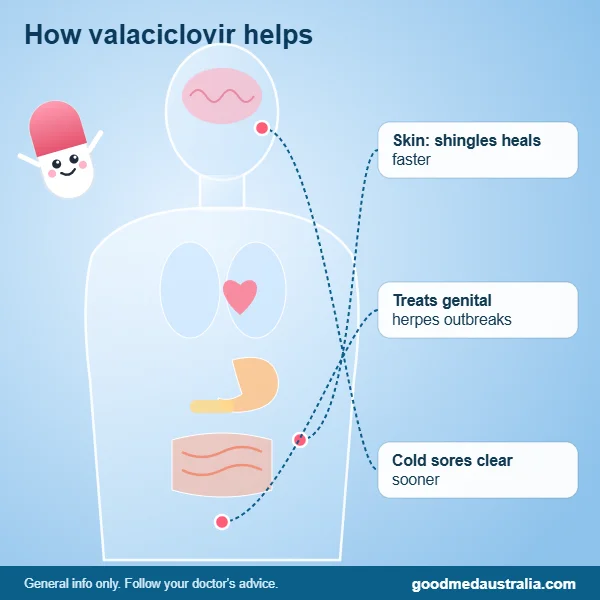
Valaciclovir is one of those medicines many people have heard of but few can explain. It’s a prescription antiviral, often linked with cold sores, shingles and genital herpes, and it attracts plenty of questions. Does it cure the virus? Is it safe for older relatives? What should you watch for? This article covers what it is, what it’s approved for in Australia, what side effects to know about, and where the evidence stops.
What valaciclovir is and how it works
Valaciclovir is an antiviral medicine. It is a “prodrug”, meaning the body converts it into another medicine, aciclovir, which then interferes with the way certain viruses copy themselves. Slowing viral replication is why it can help manage an outbreak and reduce viral shedding.
It does not remove the virus from the body. Herpes viruses can remain dormant after the first infection, and valaciclovir does not permanently eliminate that latent virus. It’s best understood as a way to manage episodes and lower risk, not a cure.
In Australia it is a Schedule 4 medicine, so it is available by prescription only. Any decision about whether it suits you belongs with a doctor, who can consider your health history and other medicines.
What it is approved for in Australia
The approved indications listed under the Therapeutic Goods Administration (TGA) and ARTG are:
- Shingles (herpes zoster): for adults who start treatment within 72 hours of the rash appearing.
- Ophthalmic zoster: shingles affecting the eye region.
- Recurrent cold sores (herpes labialis): short-term treatment of repeat episodes.
- Genital herpes: treatment of first and recurrent episodes, and long-term suppression of recurrences.
- Reducing genital herpes transmission: used as suppressive therapy alongside safer sex practices to lower the risk of passing the virus to an uninfected partner.
- CMV prevention: preventing cytomegalovirus infection and disease after solid organ transplantation.
Seek prompt assessment for suspected shingles. A rash near the eye, eye pain or visual changes needs urgent same-day care. A delay beyond 72 hours is not a reason to avoid medical review.
The transmission point also needs care. Suppressive therapy can lower the risk of passing on genital herpes, but it does not remove it, which is why it is paired with safer sex practices.
Side effects: common and more serious
Common effects are usually mild and include nausea, headache, stomach pain and mild dizziness. Many people notice little or nothing, but if symptoms persist or bother you, tell your pharmacist or doctor.
Kidney health and fluids
Keep adequately hydrated according to your own health needs. People with fluid restrictions or kidney disease need an individual plan; the prescriber may need to adjust the dose.
Neurological effects
Confusion, hallucinations or agitation can be serious, especially in older adults or with kidney impairment. Seek urgent medical assessment rather than waiting for symptoms to settle.
Consider a family member in their eighties who starts a course for shingles and becomes unusually muddled or agitated. It would be easy to put this down to being unwell or to age, but it could be a medicine effect. Contact a doctor or pharmacist promptly rather than waiting it out. For severe symptoms, seek urgent medical help.
Who needs extra care
- Older adults: higher risk of neurological side effects, especially if kidney function is reduced.
- People with kidney conditions: they should tell their prescriber so the choice can be reviewed.
- Pregnancy and breastfeeding: these need individual assessment by a healthcare practitioner, who will weigh the risks and benefits.
- Transplant recipients: CMV prevention is a specialist area managed by the transplant team.
Using it sensibly in the Australian system
Because valaciclovir is prescription-only, a doctor decides whether it’s appropriate. Some medicines are subsidised under the Pharmaceutical Benefits Scheme (PBS) only when certain criteria are met, so ask your pharmacist about eligibility and cost. Read the Consumer Medicine Information (CMI) that comes with the medicine, and report any suspected side effect to your doctor or pharmacist. Adverse events can also be reported to the TGA.
Frequently asked questions
Does valaciclovir cure herpes or shingles?
No. It can help manage outbreaks, shorten their duration and reduce viral shedding, but it does not permanently remove the dormant virus.
Does it stop me passing genital herpes to a partner?
Used as suppressive therapy alongside safer sex practices, it can lower the risk of transmission to an uninfected partner. It does not remove the risk entirely.
Why does fluid intake matter?
Staying well hydrated helps protect the kidneys by reducing the chance of the medicine forming deposits in the kidney tubules.
Is it safe in pregnancy or while breastfeeding?
This needs an individual assessment. Speak to your doctor or pharmacist before making any decision.
Sources and further reading
Valtrex. Check the leaflet matching your exact product; formulations, approved uses and instructions can differ.
Explore more medicine safety guides or read our frequently asked questions.
General education only. This does not replace an individual assessment by a doctor or pharmacist. In an emergency in Australia, call 000.
Find more trusted, plain-English health guides at goodmedaustralia.com.