
Sorry, nothing in cart.
Blog

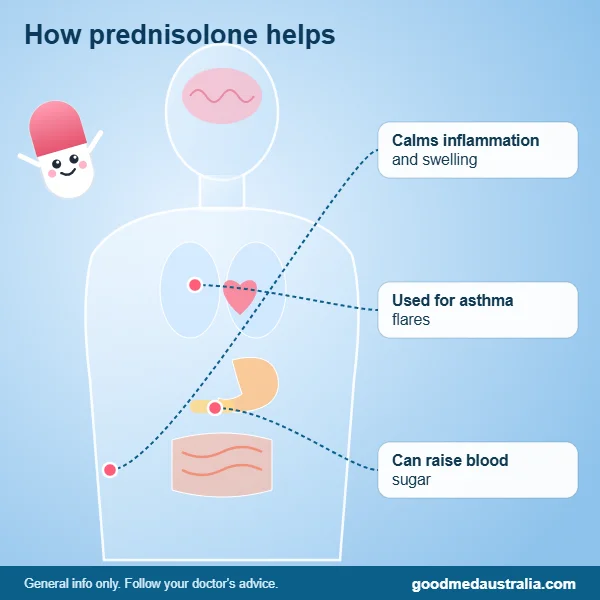
Most people who search for prednisolone side effects are not after a pharmacology lecture. They have a script in hand, or a family member does, and they want to know what to expect this week, what might creep up over months, and what would be a reason to call someone. Those questions have different answers depending on how long the medicine is taken, which is where most generic lists fall short.
What prednisolone is, and where it fits
Prednisolone is a corticosteroid, a synthetic version of cortisol. Cortisol is a hormone your adrenal glands make naturally to help manage stress, metabolism and immune responses. It is not a herbal remedy and has no traditional-use history. It is a potent, regulated pharmaceutical.
In Australia, the Therapeutic Goods Administration (TGA) approves prednisolone to manage acute and chronic inflammatory and autoimmune conditions. Approved uses include severe asthma flare-ups, severe allergic reactions, rheumatoid arthritis, gout, inflammatory bowel disease, certain skin conditions and immunosuppression.
Short-term side effects: days to a couple of weeks
Courses lasting a few days to two weeks generally carry a lower risk of lasting harm. The effects people notice early are usually these:
- Increased appetite
- Fluid retention or bloating
- Nausea or reflux
- Mild restlessness
- Trouble sleeping
- Mild mood changes
As an illustration, imagine someone prescribed a short course after an asthma flare-up. They might find themselves raiding the pantry at 10 pm, lying awake, and feeling a bit wired and irritable. That is a typical early pattern, and it is the kind of thing the medicine’s Consumer Medicine Information (CMI) leaflet describes.
Long-term side effects: weeks to months
Extended use, or repeated high-dose bursts, carries a different risk profile. Effects tend to build gradually, which is why they are easy to miss at first:
- Fat redistribution, including a rounder “moon face” and abdominal swelling
- Persistent weight gain
- Thinner skin and easy bruising
- Higher blood pressure
- Raised blood sugar
- Reduced bone mineral density, which can lead to osteoporosis
- A higher risk of infections
Not everyone develops these effects. They explain why treatment needs an appropriate duration and monitoring. Serious infection, blood-sugar changes and mood effects can occur even during short courses.
A rough timeline
The sources used here do not give exact timings for each effect, so read this as a general pattern rather than a schedule. Individual responses vary.
Why stopping suddenly is a problem
With prolonged use, the adrenal glands slow down or temporarily pause their own cortisol production, because the medicine is already supplying a steroid. This is called adrenal suppression. If the tablets are stopped abruptly, the body may not be able to make enough cortisol to cope, which can trigger an adrenal crisis. The signs include extreme fatigue, severe dizziness, vomiting and low blood pressure.
This is why tapering must be planned and monitored by a doctor. Feeling better, or fed up with the side effects, is not a safe reason to stop on your own. If side effects are bothering you, ring your doctor or pharmacist first.
Practical ways to ease day-to-day discomfort
These tips do not change what you have been prescribed. They are about managing comfort within it.
- Timing and food: Oral doses are commonly taken in the morning with food, which can reduce both sleep disruption and stomach irritation. Check your own instructions and ask your pharmacist if you are unsure.
- Sleep habits: Regular bedtimes and a wind-down routine may help if restlessness is keeping you up.
- Salt intake: Keeping an eye on salt may help with fluid retention and bloating.
- Keep a simple log: Jot down mood, sleep and appetite changes. It gives your doctor something concrete to work with at a review.
Short-term effects are generally temporary and ease after a course ends or the amount is reduced under medical guidance.
Monitoring for longer courses
People on prolonged treatment need ongoing checks from their healthcare team. These typically cover blood pressure, blood glucose, eye health and bone density. Bringing up new symptoms at these reviews, rather than waiting, makes problems easier to catch early.
When to seek urgent help
Do not wait for a routine appointment if you experience any of the following while taking prednisolone:
- Severe abdominal pain
- Chest pain
- Sudden changes in vision
- High fever
- Severe mood disturbances
- Extreme fatigue, severe dizziness or vomiting, especially after missing or stopping doses
Seek urgent medical attention for these. In an emergency, call 000. Healthdirect and your community pharmacist can also help you decide what to do next when you are unsure how serious a symptom is.
Frequently asked questions
Will every side effect happen to me?
No. Risk rises with longer use and repeated high-dose bursts, and short courses generally carry a lower risk of lasting harm. Experiences vary from person to person.
Can I stop if the side effects are bothering me?
Not on your own, particularly after prolonged use. Because of adrenal suppression, stopping abruptly can be dangerous. Speak to your doctor or pharmacist, who can advise on any changes.
Where can I find reliable information?
The CMI leaflet for your specific product is a good starting point, along with Healthdirect Australia, Arthritis Australia and eviQ. The TGA also has a process for reporting suspected side effects, and your pharmacist can point you to it.
Sources and further reading
Predsolone. Check the leaflet matching your exact product; formulations, approved uses and instructions can differ.
Explore more medicine safety guides or read our frequently asked questions.
General education only. This does not replace an individual assessment by a doctor or pharmacist. In an emergency in Australia, call 000.
Find more trusted, plain-English health guides at goodmedaustralia.com.