
Sorry, nothing in cart.
Blog

Naltrexone side effects: what to know before you start
Most people don’t go looking for naltrexone side effects out of idle curiosity. They’ve been prescribed it, or they’re considering a conversation with their doctor, and they want to know what the first few weeks will feel like and which symptoms matter. The honest answer is that most side effects are mild and settle quickly, but a few risks deserve proper attention. They are often missing from short symptom lists.
This article is general education only. It is not personal medical advice, and it doesn’t replace a conversation with your GP or pharmacist.
What naltrexone is approved for in Australia
Oral naltrexone is a Schedule 4 prescription-only medicine registered with the Therapeutic Goods Administration (TGA). Its approved uses are:
- Alcohol dependence, as part of a comprehensive treatment program, to help reduce cravings and prevent relapse.
- Maintenance treatment for people formerly dependent on opioids who have completely stopped using them, again as an add-on to broader support.
A separate combination tablet containing naltrexone and bupropion is approved for weight management. Its side-effect profile is not the same as naltrexone on its own, so ask your pharmacist if that’s the product you’ve been given.
Common side effects
The side effects most often reported with approved use are:
- nausea and stomach cramps or pain
- headache
- dizziness
- fatigue
- anxiety or nervousness
- sleep disturbances, including insomnia and vivid dreams
These are typically temporary and tend to ease within the first few weeks as the body adjusts. That is a general pattern, not a guarantee. If a symptom is severe, or isn’t improving, tell your prescriber rather than waiting it out or stopping on your own.
A practical example: the queasy first week
Say someone feels nauseated and a bit dizzy in the first week. That fits the usual pattern and is worth mentioning at the next check-in. If the nausea is intense, or they can’t keep fluids down, that’s a reason to call the doctor or pharmacist sooner. Either way, the useful move is to ask for advice before changing how they take the medicine.
Side effects versus withdrawal: an important difference
Many articles blur two different things. One is the side effects of naltrexone itself. The other is withdrawal, from alcohol or from opioids, that can occur around the time treatment begins. The two can feel similar, with nausea, anxiety, poor sleep and general unease, but the cause and the response are different.
Opioids deserve particular care. Naltrexone blocks opioid receptors, so if it is taken while opioids are still in the body, it can precipitate sudden and severe withdrawal. That is why it is only used in people who have completely stopped opioids, and why your doctor will ask detailed questions about recent use, including opioid-containing medicines. Be upfront about everything you’ve taken, including prescription and over-the-counter products. If you’re unsure whether a medicine contains an opioid, ask your pharmacist.
Liver health and monitoring
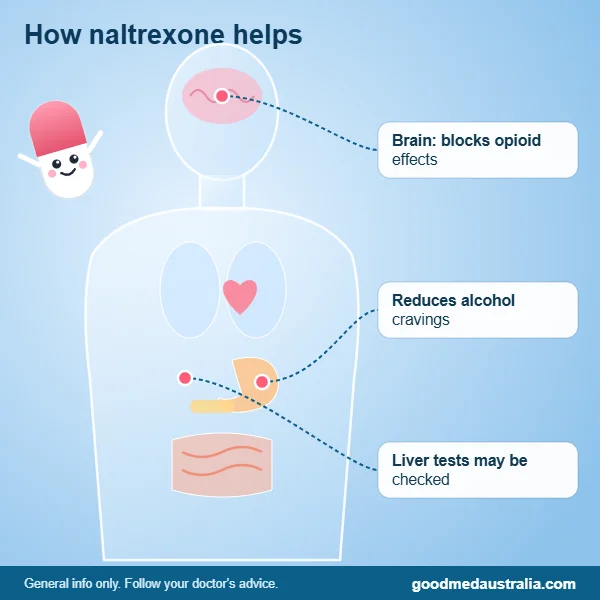
Naltrexone can affect liver enzyme levels, so doctors routinely arrange liver function tests before treatment and periodically afterwards. Having these tests is a normal part of safe prescribing, not a sign that something has gone wrong.
Tell your doctor promptly about any new symptoms that concern you, particularly anything that might point to a liver problem. Mood changes, increased anxiety and allergic reactions are also commonly searched concerns, and they’re worth raising early rather than waiting for the next appointment.
The risk after stopping that often gets missed
After a period without opioids, tolerance can fall. When naltrexone is stopped or wears off, a previously tolerated opioid amount may cause a fatal overdose. Trying to overcome the blockade with large opioid amounts during treatment is also dangerous.
For that reason, stopping naltrexone should be planned with your prescriber, and support should be in place if there is any chance of returning to opioid use. If you’ve already stopped, or are thinking about it, speak to a doctor or pharmacist first.
Questions to take to your doctor or pharmacist
- Which version of naltrexone am I being given, and is it being used for an approved purpose?
- When will I have liver function tests?
- Which side effects should I report straight away?
- Do any of my other medicines contain opioids?
- What is the plan if I want to stop?
Frequently asked questions
How long do naltrexone side effects last?
Common effects such as nausea, headache and tiredness are typically temporary and usually ease within the first few weeks. If they persist or worsen, speak to your prescriber.
Does naltrexone harm the liver?
It can affect liver enzyme levels, which is why doctors arrange baseline and periodic liver function tests. Your doctor will decide what monitoring suits you.
Why is stopping naltrexone risky if I’ve used opioids?
Opioid tolerance may fall during abstinence. After treatment ends, previously tolerated amounts may cause fatal overdose. Trying to override the blockade during treatment can also be fatal.
Liver symptoms and withdrawal
Acute hepatitis and liver failure are contraindications. Stop naltrexone and seek urgent medical advice for yellow eyes or skin, dark urine or persistent upper abdominal pain. It does not treat acute alcohol withdrawal; ask your clinician for a separate withdrawal plan when needed.
Sources and further reading
ARX-Naltrexone. Check the leaflet matching your exact product; formulations, approved uses and instructions can differ.
Explore more medicine safety guides or read our frequently asked questions.
General education only. This does not replace an individual assessment by a doctor or pharmacist. In an emergency in Australia, call 000.
Find more trusted, plain-English health guides at goodmedaustralia.com.