
Sorry, nothing in cart.
Blog

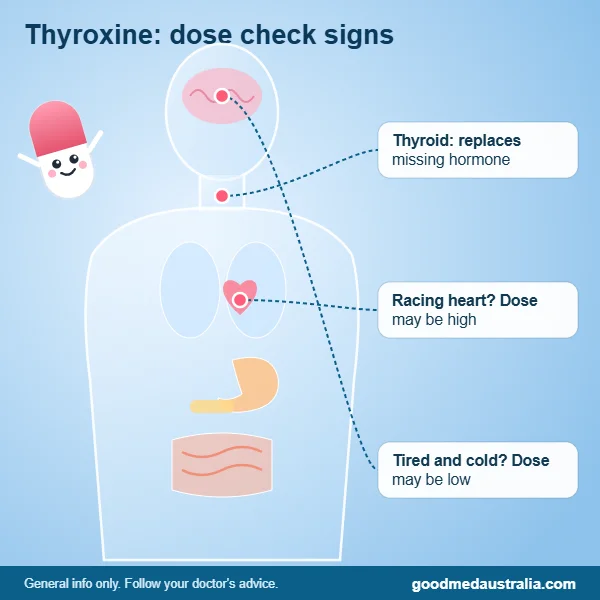
If you take thyroxine every day and something feels off, the natural question is whether your dose is still right. Thyroxine (levothyroxine) is a replacement hormone, so the aim is balance. Too much or too little can both cause symptoms, and the two can look surprisingly different. This article explains what to look out for and what a proper review involves. It is general education only, not medical advice, diagnosis or dosing instructions.
What thyroxine is approved for
Synthetic thyroxine sodium is approved by the Therapeutic Goods Administration (TGA) as hormone replacement where there is a demonstrated thyroid hormone deficiency (hypothyroidism). It is also approved to suppress thyroid-stimulating hormone (TSH) in TSH-responsive thyroid carcinomas. In Australia it is sold under brand names including Oroxine, Eutroxsig, Eltroxin and Thyrox.
It is not approved or safe for weight loss or obesity in people with normal thyroid function.
Signs your dose may be too high
Taking more thyroid hormone than your body needs (over-replacement) can mimic an overactive thyroid. Common signs include:
- a rapid or fluttering heartbeat (palpitations)
- feeling wired or anxious
- heat intolerance and excessive sweating
- tremors
- trouble sleeping
- unexplained weight loss
- frequent loose stools
Signs your dose may be too low
Under-replacement tends to look like the original problem returning:
- ongoing tiredness or sluggishness
- brain fog
- unexplained weight gain
- dry skin
- constipation
- feeling unusually cold
These symptoms are not specific. Many have other causes, which is why a blood test, not a symptom checklist, guides any decision.
Why you can feel unwell even when the dose is unchanged
Sometimes the tablet is fine and the problem is how much of it reaches your bloodstream. Food, coffee, calcium carbonate (found in some antacids and supplements), iron supplements and soy can all interfere with absorption.
The general guidance is to take levothyroxine once daily on an empty stomach with water, 30 to 60 minutes before breakfast or caffeine. It should also be kept at least four hours apart from calcium or iron supplements.
Here are two everyday examples of how this can go wrong:
- Someone who takes their tablet with a morning coffee, then changes to taking it after breakfast, may absorb it differently from one week to the next.
- Someone who starts a calcium or iron supplement and takes it at the same time as their thyroxine may find their blood results drift, even though their routine feels the same.
Mention any new supplements or changes in routine to your pharmacist or doctor. They can help you work out whether timing is part of the picture.
Brand changes matter in Australia
Do not switch levothyroxine brands without a plan from your clinician. Formulations can differ, and thyroid blood tests may be needed after a switch to check the dose remains appropriate.
Storage is another practical point. Brands can differ in their storage requirements, and heat can affect stability. Check the packaging and ask your pharmacist what applies to your brand, particularly during hot weather.
Why long-term over-replacement deserves attention
Short-term jitteriness is easy to notice. The longer-term risks are easier to miss. The TGA warns that excessive thyroxine over extended periods lowers TSH and speeds up bone turnover. This significantly raises the risk of osteoporotic fractures, particularly in older people and post-menopausal women. It can also increase the risk of cardiac arrhythmias such as atrial fibrillation.
A dose that is only slightly too high may cause few obvious symptoms, which is one reason regular monitoring matters even when you feel well.
How a dose review works
Dose suitability is assessed with a thyroid function test, which measures TSH and free T4. After any dose change, it takes about 4 to 8 weeks for blood levels to settle. Testing sooner may not show the true effect of the change.
Because of that lag, adjusting your own tablets in response to how you feel on a given day can make things worse. Changes should only be made by your doctor after a validated blood test.
Frequently asked questions
Should I change my dose if I feel jittery or tired?
No. Speak to your GP, endocrinologist or pharmacist, who can arrange a TSH and free T4 test.
Can I swap brands if one is out of stock?
A brand change should be agreed with your doctor or pharmacist, with follow-up testing when appropriate.
Do I need to avoid supplements altogether?
Not necessarily, but timing matters. Calcium and iron should be separated from thyroxine by at least four hours. Check with your pharmacist about your own supplements.
How soon after a change will a blood test be meaningful?
Usually around 4 to 8 weeks, once levels have stabilised.
Urgent symptoms
Chest pain, fainting or a severe fast or irregular heartbeat requires urgent medical assessment. Symptoms alone cannot determine a dose change; your clinician uses thyroid blood tests and your health history.
Sources and further reading
Oroxine. Check the leaflet matching your exact product; formulations, approved uses and instructions can differ.
Explore more medicine safety guides or read our frequently asked questions.
General education only. This does not replace an individual assessment by a doctor or pharmacist. In an emergency in Australia, call 000.
Find more trusted, plain-English health guides at goodmedaustralia.com.