
Sorry, nothing in cart.
Blog

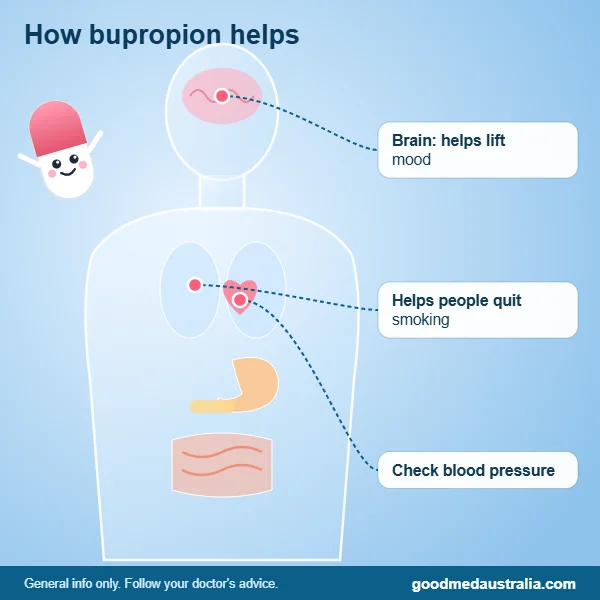
This article is for general education only. It does not give dosage advice, recommend any product or claim to treat any condition. Whether bupropion suits you is a decision for you and your doctor or pharmacist.
Most people who search for bupropion side effects have already been prescribed it, or are about to be. They are usually not after a long list. They want to know which effects are common and likely to pass, which are rare but serious, and what should prompt a phone call to a health professional. This article sorts the information into those groups, with an Australian focus.
What bupropion is, and how it is used in Australia
Bupropion is a modern synthetic medicine. It works as a norepinephrine-dopamine reuptake inhibitor (NDRI), which is a different mechanism from the SSRI antidepressants many people know. It has no traditional or herbal use.
Much of the content online is written for a US audience. It refers to brands such as Wellbutrin and Aplenzin and to US approvals for major depressive disorder and seasonal affective disorder. The Australian picture is narrower. On the Australian Register of Therapeutic Goods, bupropion appears in two main forms:
- Zyban SR: approved as short-term adjunctive therapy for nicotine dependence (smoking cessation).
- Contrave: a combination of bupropion and naltrexone, approved for weight management in adults who meet specific BMI criteria.
Contrave contains a second active ingredient, so its product information is worth reading separately. This article focuses on bupropion itself.
Common side effects: what to expect
The side effects most often reported, according to sources such as Healthdirect Australia, are:
- dry mouth
- trouble sleeping (insomnia), often described as transient
- headache
- nausea
- dizziness or lightheadedness
- excessive sweating
- mild agitation
Some people notice one or two of these, and others notice none. Because the sleep and agitation effects come from a medicine that acts on alertness-related chemicals, they are among the ones people most often mention.
Practical examples
- Dry mouth: keeping water handy and sipping through the day is a sensible, low-risk comfort measure.
- Poor sleep: if you are lying awake, tell your pharmacist or doctor rather than adjusting anything yourself. They can look at the whole picture, including caffeine, alcohol and other medicines.
- Nausea or headache: note when they occur and how long they last. A short written record makes the conversation with your GP much more useful.
Mild effects are not always harmless to ignore, particularly if they stop you sleeping or functioning normally. A quick call to a pharmacist is reasonable.
Serious side effects and warnings
These effects are less common but need proper attention.
Seizures
Seizures are a recognised, serious adverse reaction. Risk factors include:
- a pre-existing seizure disorder
- a head injury
- an eating disorder
- sudden withdrawal from alcohol or sedatives
This is why a thorough medical history matters before starting. If you have any of these, or drink heavily, say so. Someone who has a seizure needs emergency help, so call 000.
Blood pressure
Severe spikes in blood pressure are a recognised risk. Anyone with existing blood pressure problems should make sure their prescriber knows, and may need monitoring.
Mood and behaviour changes
Neuropsychiatric effects, including marked agitation and changes in mood, are listed among the serious risks. If you or someone close to you notices a sudden or worrying shift, contact a doctor promptly. Do not wait to see whether it passes. If there is any risk of harm, seek urgent help.
Serotonin syndrome and interactions
The TGA has updated the product information for bupropion to warn about serotonin syndrome when it is taken with other serotonergic medicines, such as SSRIs or SNRIs. Many people take several medicines at once, so ask a pharmacist to check your full list, including anything bought over the counter or as a supplement.
When to speak to a doctor or pharmacist
Speak to your GP or pharmacist if:
- a side effect is persistent, distressing or interfering with sleep or daily life
- you are taking, or planning to start, other medicines, especially SSRIs, SNRIs or sedatives
- you have a history of seizures, head injury, an eating disorder or high blood pressure
- you drink alcohol regularly and may cut back or stop suddenly
You can also report a suspected side effect to the TGA. Reports help the regulator monitor medicine safety across the country.
Frequently asked questions
Do bupropion side effects go away?
Some, such as insomnia, are described as transient. Others may persist. Because this varies from person to person, tell your prescriber if something does not settle.
Is bupropion the same as Zyban?
Bupropion is the active ingredient. Zyban SR is the Australian brand approved for smoking cessation.
Can I take bupropion with an SSRI?
Combining it with serotonergic medicines carries a TGA-flagged risk of serotonin syndrome. Never combine medicines without professional advice.
Who must not use Zyban SR
Zyban SR is unsuitable with a seizure disorder, current or previous anorexia or bulimia, or abrupt withdrawal from alcohol or sedatives. A seizure means no further doses and urgent medical care. Do not combine different bupropion products; have your pharmacist check interactions.
Sources and further reading
Zyban SR CMI. Check the leaflet matching your exact product; formulations, approved uses and instructions can differ.
Explore more medicine safety guides or read our frequently asked questions.
General education only. This does not replace an individual assessment by a doctor or pharmacist. In an emergency in Australia, call 000.
Find more trusted, plain-English health guides at goodmedaustralia.com.