
Sorry, nothing in cart.
Blog

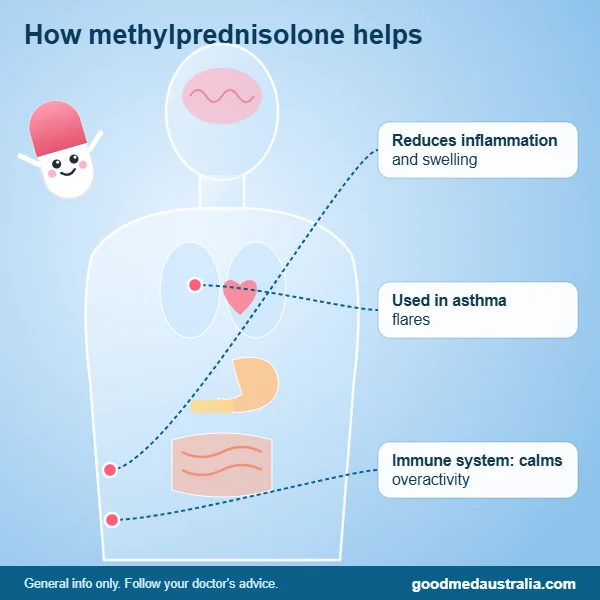
Methylprednisolone is a corticosteroid used to reduce inflammation. Tablets and injections have different instructions. This guide explains common effects and warning signs to discuss with your healthcare team.
What methylprednisolone is, and why short courses are used
Methylprednisolone is a corticosteroid. It’s a lab-made medicine that dampens inflammation, and it isn’t related to the anabolic steroids used for muscle building. It is prescription-only in Australia.
Doctors often prescribe it in short bursts, commonly under one to two weeks, to calm acute inflammation or an allergic flare-up quickly. The aim is to settle the flare and then stop, rather than to stay on it.
Common short-term side effects
The effects most people notice during a short course are temporary and usually manageable:
- Sleep disturbance. Trouble falling or staying asleep is one of the most commonly reported effects.
- Mood changes. Irritability, restlessness or a mild shift in mood can appear.
- Increased appetite. You may feel hungrier than usual.
- Fluid retention. Mild puffiness or a small rise on the scales can occur.
- Stomach upset. Mild gastrointestinal irritation is possible.
- Higher blood sugar. Corticosteroids prompt the liver to produce more glucose and make the body less responsive to insulin.
The blood sugar effect is the one that matters most for people with diabetes. It usually needs closer monitoring during a course, and your doctor may want to know about it before you start.
Is a short course safe?
A short course can still cause important side effects, including glucose changes, infection and severe mood symptoms. Risk depends on dose, other conditions and previous steroid exposure; short duration does not guarantee safety.
Repeated or prolonged courses increase risks such as bone loss and adrenal suppression. Your clinician balances these risks against the condition being treated.
The word “repeated” is worth noting. The RACGP has published guidance on multiple short courses of corticosteroids, which reflects that the picture changes when courses add up over time. If you find yourself needing several courses in a year, raise it with your GP.
Practical ways to make a course easier
These are general points often given for short oral courses. Your doctor or pharmacist may tailor them to you, so check before changing how you take any medicine.
- If sleep is the problem. Taking the medicine early in the day, if your prescriber agrees, may reduce sleep disruption. Someone who takes it at night and lies awake would have good reason to ask whether the timing can change.
- If your stomach is sensitive. Taking tablets with food can help protect the stomach lining. A piece of toast and a glass of water is a simple example.
- If you have diabetes. Keep a closer eye on your blood sugar during the course, and let your care team know if readings climb higher than usual.
- If your appetite surges. Knowing it’s a temporary effect can make it easier to keep the pantry sensible for a week or two.
Red flags: when to get medical advice
Most side effects are a nuisance rather than a danger, but some should prompt you to contact a doctor promptly:
- Severe stomach pain
- Signs of infection, such as fever
- Severe mood changes
- Vision changes
If symptoms feel severe or frightening, seek urgent medical care rather than waiting for the course to finish.
Why you shouldn’t just stop
If you start to feel better, it’s tempting to put the tablets away. Don’t decide that on your own. Stopping steroids abruptly without guidance isn’t advised, and some courses are finished with a gradual reduction in the amount taken. Whether that applies to you is your prescriber’s call, and it depends on the condition, the length of treatment and your circumstances. Follow the instructions on your prescription and ask if anything is unclear.
Where to find reliable information in Australia
The Consumer Medicine Information (CMI) leaflet for your specific product can be found through Healthdirect Australia, and your pharmacist can walk you through it. Mayo Clinic and StatPearls also publish detailed drug summaries, though they’re written with overseas systems in mind. For anything specific to your health, your GP or pharmacist is the best next step.
Frequently asked questions
Will the side effects go away after I finish?
The common short-term effects, such as poor sleep, appetite changes and mild fluid retention, are generally temporary. If something persists or worries you, speak to your doctor or pharmacist.
Can a short course damage my adrenal glands?
A single short course usually carries less risk than repeated or prolonged treatment, but adrenal suppression depends on dose and previous exposure as well as duration. Follow your clinician’s stopping plan.
Is methylprednisolone the same as the steroids athletes use?
No. It’s a corticosteroid used to reduce inflammation, not an anabolic steroid.
Can I take it if I have diabetes?
That’s a decision for your doctor. Corticosteroids can raise blood glucose, so people with diabetes usually need closer monitoring and should make sure their care team knows about the course.
Sources and further reading
Solu-Medrol — injection information. Check the leaflet matching your exact product; formulations, approved uses and instructions can differ.
Explore more medicine safety guides or read our frequently asked questions.
General education only. This does not replace an individual assessment by a doctor or pharmacist. In an emergency in Australia, call 000.
Find more trusted, plain-English health guides at goodmedaustralia.com.