
Sorry, nothing in cart.
Blog

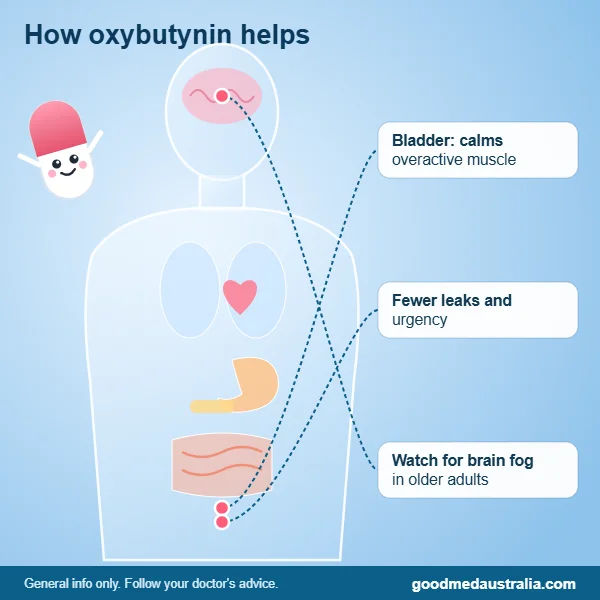
You start a new medicine for a bladder that won’t behave, and a week later your mouth feels like sandpaper and you can’t find the word you were after. Many people on oxybutynin wonder whether those two things are connected, and whether the second one is a warning sign. The short answer is that they share a cause, but they are not the same level of concern. Here is how to tell them apart.
What oxybutynin is approved to do
In Australia, oxybutynin (sold under brands such as Ditropan) is approved by the Therapeutic Goods Administration to treat the symptoms of overactive bladder: urge incontinence, urinary frequency and urgency. It belongs to a group of medicines called anticholinergics, or antimuscarinics. They block acetylcholine receptors in the bladder muscle, which reduces involuntary spasms.
That is its approved role, and nothing in this article suggests otherwise. The side effects below are the price of how the drug works, which is why they are worth understanding.
Why dry mouth is so common
Oxybutynin does not block acetylcholine only in the bladder. It blocks muscarinic receptors throughout the body. Salivary glands rely on acetylcholine signals to make saliva, so when those signals are dampened, the mouth dries out.
Dry mouth, constipation, blurred vision, drowsiness and dry skin can occur. Frequency depends on the formulation and person; read the leaflet for your own product.
The link between dry mouth and brain fog
This is the connection most side-effect lists miss. Acetylcholine is also a chemical messenger in the brain, and oral oxybutynin is small and fat-soluble, which lets it cross the blood-brain barrier. Pharmacology studies show it can bind to muscarinic receptors in regions involved in memory and concentration.
So a dry mouth and a foggy head can come from the same action, in different places. Clinical trials report that oxybutynin can cause short-term effects such as impaired short-term memory, reduced attention, confusion and drowsiness, particularly in older adults.
Short-term fog versus long-term dementia concerns
These two ideas often get mixed together online, and the mix-up causes unnecessary alarm. They are different questions with different evidence.
Observational studies link greater anticholinergic exposure with dementia risk, but they do not prove that oxybutynin causes dementia. Persistent brain fog deserves a medication review. Sudden confusion requires urgent medical assessment.
Older adults and “anticholinergic burden”
Older adults are more vulnerable to the central nervous system effects, including confusion and drowsiness, and drowsiness can raise the risk of falls. This is why guidance has shifted over time.
Older people may be particularly vulnerable to anticholinergic effects. Ask your pharmacist to review the combined burden from bladder medicines, antihistamines and other medicines.
“Burden” is the key word. Effects can add up when someone takes several medicines with anticholinergic properties. Certain allergy tablets, sleep aids and some antidepressants can fall into this group. Picture someone who takes oxybutynin for their bladder, an over-the-counter sleep aid at night and an allergy tablet in spring. Each seems minor alone, but together they may add up to more dry mouth, drowsiness or confusion than any one would cause. A pharmacist can look at the whole list, including products bought off the shelf.
Practical safety in an Australian summer
Oxybutynin suppresses sweating, which raises the risk of overheating and heat stroke. That matters in a country where a January afternoon can be punishing. Some sensible habits to discuss with your pharmacist:
- Be extra careful on hot days, during outdoor work or exercise, and in poorly cooled homes.
- Don’t ignore feeling unusually hot, flushed or unwell. Seek medical advice promptly.
- If you feel drowsy or your vision is blurred, avoid driving or operating machinery until you know how the medicine affects you.
- Ask your pharmacist about alcohol and other medicines, since the drowsiness and cognitive effects may overlap with other things that make you sleepy.
If side effects are hard to live with
Don’t stop a prescribed medicine suddenly on your own. Book a conversation with your GP or pharmacist and bring specifics: when the dry mouth or fog started, what time of day it is worst, and every medicine and supplement you take. Ask whether a medication review makes sense, and whether non-drug approaches or non-anticholinergic alternatives suit your situation. Going in with these details makes the discussion much more productive.
Frequently asked questions
Does the dry mouth go away?
The duration varies. Report persistent symptoms and do not drive while drowsy, confused or unable to see clearly.
Does oxybutynin cause dementia?
No causal link has been shown. Observational studies found an association between long-term, high exposure to strong anticholinergic medicines and a higher risk of cognitive decline or dementia in people 55 and over, but they can’t prove cause and effect.
Is oxybutynin suitable for older people?
That is a decision for the prescriber. Older adults are more prone to confusion, drowsiness and falls, and Australian guidance encourages caution and review.
When to seek urgent care
Inability to pass urine, severe eye pain or sudden confusion needs urgent assessment. Reduced sweating can cause dangerous overheating; collapse or confusion in the heat is an emergency.
Sources and further reading
NHS oxybutynin information. Check the leaflet matching your exact product; formulations, approved uses and instructions can differ.
Explore more medicine safety guides or read our frequently asked questions.
General education only. This does not replace an individual assessment by a doctor or pharmacist. In an emergency in Australia, call 000.
Find more trusted, plain-English health guides at goodmedaustralia.com.