
Sorry, nothing in cart.
Blog

Starting a new long-term medicine often brings a mix of relief and unease, and sulfasalazine is no exception. Some of its effects are harmless but startling, such as bright orange urine. Others are uncommon but need medical attention. Knowing which is which makes it easier to stay calm and to know when to call your doctor or pharmacist.
This article is general education only. It does not replace advice from your doctor or pharmacist, and it does not cover how to take the medicine.
What sulfasalazine is used for
In Australia, sulfasalazine is sold under brand names including Salazopyrin, Salazopyrin EN and Pyralin EN. The “EN” versions are enteric-coated, meaning the tablet has a coating designed to reduce irritation to the upper digestive tract.
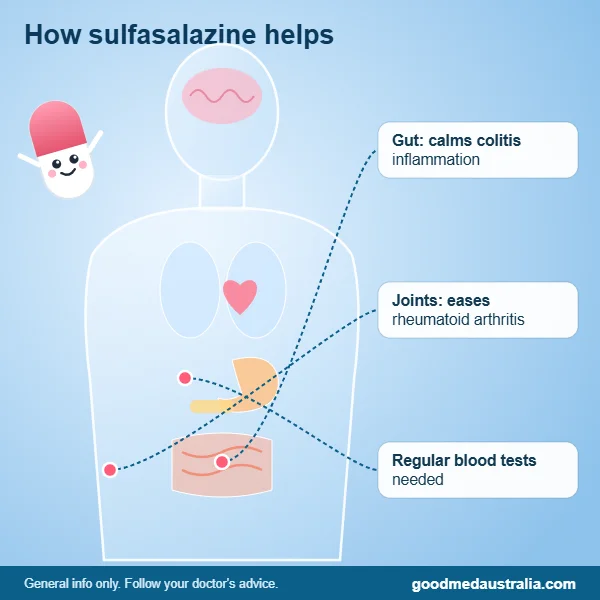
Sulfasalazine is used for inflammatory bowel disease and rheumatoid arthritis. Approved indications differ by formulation; the Salazopyrin leaflet describes the relevant uses.
- rheumatoid arthritis
- ulcerative colitis
- Crohn’s disease
- Historical background: The drug was first made in the 1940s by joining a sulfonamide antibiotic with a salicylate (5-ASA). The thinking at the time was that rheumatoid arthritis might have a bacterial origin. That was an early medical hypothesis and is not the basis for its use today.
Common side effects: the ones most people ask about
Common effects include:
- loss of appetite
- nausea and vomiting
- abdominal discomfort
- dizziness
- headaches
Not everyone develops these effects. Discuss persistent nausea with your doctor or pharmacist. Swallow enteric-coated tablets whole and follow your own pack instructions.
Orange urine, skin and contact lenses
Orange-yellow urine can be a recognised effect. Ask your pharmacist about unexpected colour changes, and never assume yellow skin or eyes is harmless staining.
The practical catch is for contact lens wearers. The colour can permanently stain soft contact lenses. If you wear them, raise this with your pharmacist or optometrist, who can talk through your options.
Not every colour change is harmless, though. If your skin or the whites of your eyes turn yellow, that is a different matter and worth reporting promptly, because liver problems are one of the rarer risks (see below).
Sun sensitivity in an Australian climate
Sulfasalazine can cause photosensitivity, which means your skin may burn more easily than usual. Given Australia’s UV levels, this deserves more attention here than it might in cooler countries. Everyday sun protection such as shade, covering clothing, a hat and sunscreen matters even more, and your pharmacist can advise on what suits your situation. A day at the beach or a long stretch of outdoor work is exactly when this effect could catch you out.
Male fertility
Sulfasalazine can temporarily reduce sperm count and motility, which may lower fertility in men. The research is reassuring on one important point: this effect is reversible, and normal fertility typically returns after the medicine is stopped under medical supervision.
If you are planning a family, speak to your doctor before changing anything. Stopping a medicine that is controlling arthritis or bowel inflammation can have consequences of its own, so the decision needs to be made together.
Rare but serious effects and why blood tests matter
Some side effects are uncommon but more serious:
- liver dysfunction
- blood dyscrasias, such as a low white blood cell count
- severe skin hypersensitivity reactions
Many of these changes cannot be felt. That is why people on sulfasalazine need ongoing medical supervision and periodic blood tests. Those tests are a routine safety check, not a sign that something has gone wrong.
Contact your doctor promptly if you develop a severe skin reaction, signs of an allergic reaction, or any symptom that worries you. For a severe reaction, such as difficulty breathing, call 000.
Frequently asked questions
Is orange urine a reason to stop taking sulfasalazine?
No. The colour change is a known, harmless effect. Do not stop your medicine because of it, and check with your doctor or pharmacist if you are unsure.
Are the long-term side effects different?
The more serious risks, namely liver changes, low white blood cell counts and severe skin reactions, are the reason for ongoing monitoring and periodic blood tests. Keeping those appointments is the best way to catch problems early.
Can I swap to an enteric-coated tablet if my stomach is upset?
Enteric-coated versions such as Salazopyrin EN and Pyralin EN are designed to reduce upper digestive irritation. Whether a change is right for you is a decision for your doctor or pharmacist.
Is male infertility from sulfasalazine permanent?
The effect on sperm count and motility is generally temporary, and normal fertility typically returns after the medicine is stopped under medical supervision.
Rash and yellow skin need attention
Orange-yellow urine can occur, but yellow eyes or skin must not be dismissed as staining. Seek urgent assessment for jaundice, fever or sore throat. Stop sulfasalazine and seek immediate medical advice for a new rash, mouth sores or other signs of allergy; blistering or peeling skin needs emergency assessment.
Sources and further reading
Salazopyrin. Check the leaflet matching your exact product; formulations, approved uses and instructions can differ.
Explore more medicine safety guides or read our frequently asked questions.
General education only. This does not replace an individual assessment by a doctor or pharmacist. In an emergency in Australia, call 000.
Find more trusted, plain-English health guides at goodmedaustralia.com.