
Sorry, nothing in cart.
Blog

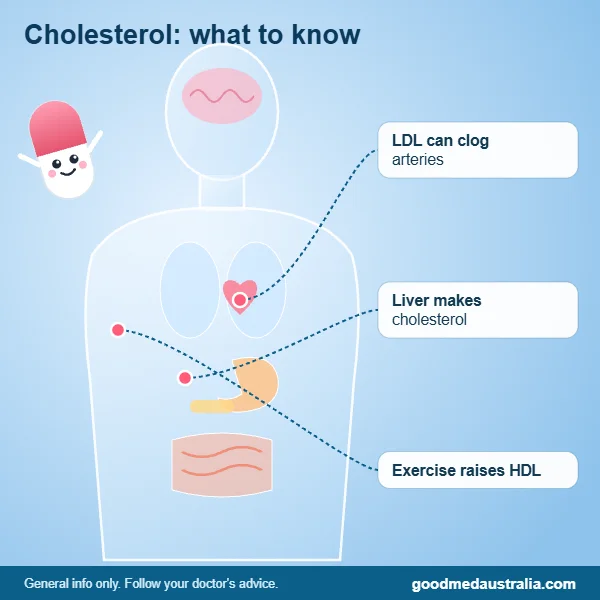
High cholesterol usually has no symptoms, so many people do not know they have it. Too much LDL cholesterol can build up in the arteries and raise the risk of heart attack and stroke.
What is the difference between LDL and HDL?
LDL is often called “bad” cholesterol because it leaves cholesterol in the arteries. HDL is called “good” cholesterol because it carries it back to the liver.
What increases the risk?
Older age, a diet high in saturated fat, inactivity, smoking, obesity, diabetes and family history. A genetic condition called familial hypercholesterolaemia affects about 1 in 250 people.
When should I be tested?
A cholesterol check forms part of a heart-risk assessment. Ask your GP when to start and how often to repeat it; earlier or more frequent testing may be needed with diabetes, kidney disease, family history or other risk factors.
What lifestyle changes help?
- Swap saturated fats for unsaturated fats from nuts, oily fish and plant oils
- Eat more soluble fibre, such as oats and legumes
- Exercise regularly
- Quit smoking and limit alcohol
What treatments are used?
Statins are the most common medicine. Report any side effects to your doctor.
In an emergency, call triple zero (000). For health advice, call Healthdirect on 1800 022 222.
Source: Healthdirect: Cholesterol. General education does not replace individual medical advice. Updated November 2026.
Find more trusted, plain-English health guides at goodmedaustralia.com.
Find more health and medicine guides and our website FAQs.