
Sorry, nothing in cart.
Blog
Protecting Muscle on Weight Loss Injections: Protein and Strength Tips
-
Posted by

13
Nov
When you eat much less on a GLP-1 medicine, some of the weight you lose can come from muscle, not just fat. Protecting muscle keeps you strong, supports your metabolism and helps you feel your best.
Key points at a glance
- Rapid weight loss can include loss of muscle.
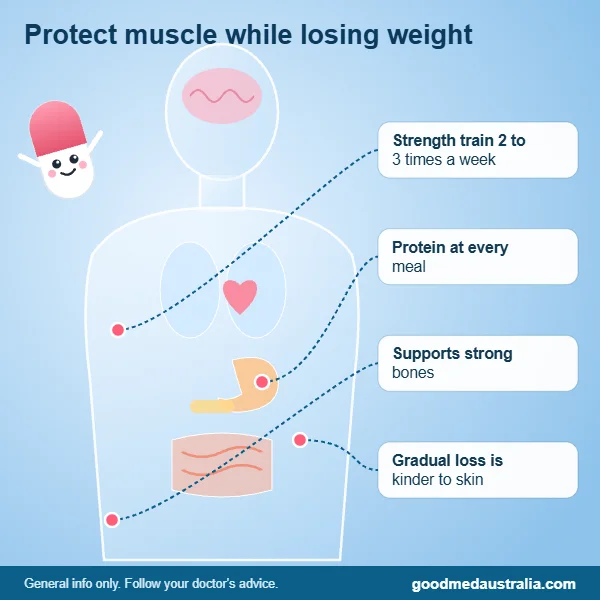
- Eating enough protein and doing strength training helps protect muscle.
- Aim to include a protein food at every meal.
- Hydration and fibre also matter when appetite is low.
- A dietitian can tailor a plan for you.
Why muscle matters
Muscle keeps you strong and mobile, supports blood sugar control and helps protect your bones and joints, especially as you get older.
Protein tips when appetite is low
- Start meals with the protein part.
- Choose eggs, Greek yoghurt, fish, chicken, tofu, lentils and lean meat.
- Try protein-rich snacks such as cottage cheese or a small smoothie.
- Spread protein across the day rather than one big meal.
Move your muscles
- Do strength exercises 2 to 3 times a week: squats, push-ups, bands or weights.
- Keep walking daily.
- Start gently and build up.
About “Ozempic face”
Fast weight loss from any cause can make the face look thinner or older. Slower, steady loss, enough protein and good hydration may help. Talk to your doctor about your pace of weight loss.
Read: exercise for weight loss, managing GLP-1 nausea and weight loss injections.
Frequently asked questions
How much protein do I need?
Needs vary with age, weight and health. A dietitian or doctor can give you a personal target.
Can I build muscle on Ozempic?
Yes, with strength training and enough protein, you can protect and even build muscle.
Are protein shakes OK?
They can help when appetite is low, but whole foods are a good first choice.
Is muscle loss permanent?
No. Strength training and good nutrition help rebuild muscle.
Find more trusted, plain-English health guides at goodmedaustralia.com.
In an emergency, call triple zero (000). For health advice, call Healthdirect on 1800 022 222.
Source: Healthdirect; NHS weight loss guidance. General education does not replace individual medical advice. Updated November 2026.