
Sorry, nothing in cart.
Blog

Almost everyone on a weight loss medicine hits a plateau at some point. It is normal, and it does not mean the medicine has stopped working.
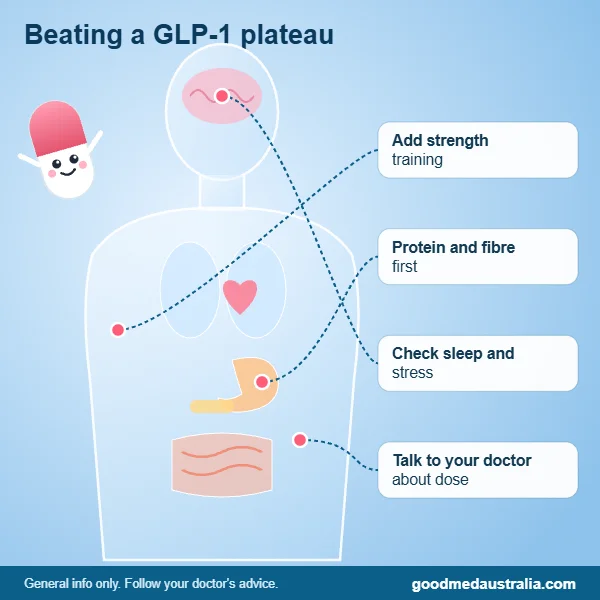
Key points at a glance
- Plateaus are a normal part of weight loss as your body adapts.
- Your energy needs drop as you weigh less.
- Protein, strength training and steady habits help.
- Sleep, stress and alcohol all affect progress.
- Your doctor may review your dose or plan.
Why plateaus happen
- A smaller body needs less energy.
- Some muscle loss lowers energy use.
- Appetite and portions can slowly creep back up.
- Fluid shifts can hide fat loss on the scales.
What helps
- Track food for a week to spot changes.
- Prioritise protein and vegetables.
- Add 2 to 3 strength sessions a week.
- Aim for 7 to 9 hours of sleep.
- Limit alcohol and sugary drinks.
- Measure your waist, not just weight.
When to talk to your doctor
If you have been stalled for a couple of months, your doctor can review your dose, other medicines and health conditions.
Read: protecting muscle, what to eat on GLP-1s and exercise for weight loss.
Frequently asked questions
How long do plateaus last?
Often a few weeks; longer stalls are worth discussing with your doctor.
Should I eat less to break a plateau?
Not necessarily. Eating too little can cost muscle. Focus on protein and activity.
Will a higher dose help?
Sometimes. Your doctor decides if a dose change is appropriate.
Is it normal to stop losing weight?
Yes. Most people reach a new stable weight eventually.
Find more trusted, plain-English health guides at goodmedaustralia.com.
In an emergency, call triple zero (000). For health advice, call Healthdirect on 1800 022 222.
Source: Healthdirect; NHS weight loss guidance. General education does not replace individual medical advice. Updated November 2026.