
Sorry, nothing in cart.
Blog

Seeing a doctor about erection problems is a simple, private appointment. It also matters for your wider health, because ED can be an early sign of heart disease or diabetes.
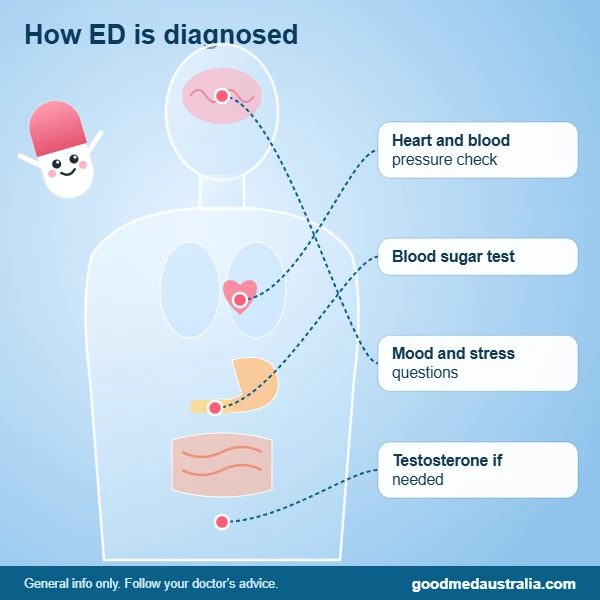
Key points at a glance
- Diagnosis is mostly based on a conversation and a short exam.
- Blood tests usually check sugar, cholesterol and sometimes testosterone.
- Blood pressure and heart risk are checked.
- ED can appear years before heart problems.
- Most men do not need specialist tests.
Questions your doctor may ask
- How long the problem has been happening.
- Whether you get morning or night-time erections.
- Your medicines, alcohol, smoking and drug use.
- Stress, mood and relationship factors.
- Any problems with desire or ejaculation.
The physical exam
Your doctor may check blood pressure, heart, weight and waist size, and sometimes the genitals and pulses in the legs.
Common tests
- Fasting blood sugar or HbA1c (diabetes).
- Cholesterol.
- Morning testosterone if desire is low or there are other signs.
- Kidney and thyroid tests in some cases.
When are specialist tests used?
Ultrasound or referral to a urologist is usually only needed if treatment does not work, after pelvic injury or surgery, or if there is a physical change such as a curve in the penis.
Related guides: ED and heart disease, ED appointment checklist and psychological vs physical ED.
Frequently asked questions
Do I need a blood test for ED?
Usually yes: blood sugar and cholesterol help find hidden causes.
Is the exam embarrassing?
Doctors see ED often; the exam is brief and you can ask questions first.
Can my GP treat ED?
Yes. Most men are treated by their GP.
Why does ED matter for my heart?
The small arteries in the penis can show damage before heart arteries do.
Find more trusted, plain-English health guides at goodmedaustralia.com.
In an emergency, call triple zero (000). For health advice, call Healthdirect on 1800 022 222.
Based on: RACGP; Healthy Male (Andrology Australia); NHS. General education does not replace individual medical advice. Updated November 2026.