
Sorry, nothing in cart.
Blog

Lisinopril (sold as Angiotensin and other brands) is an ACE inhibitor used for high blood pressure, heart failure and after heart attack.
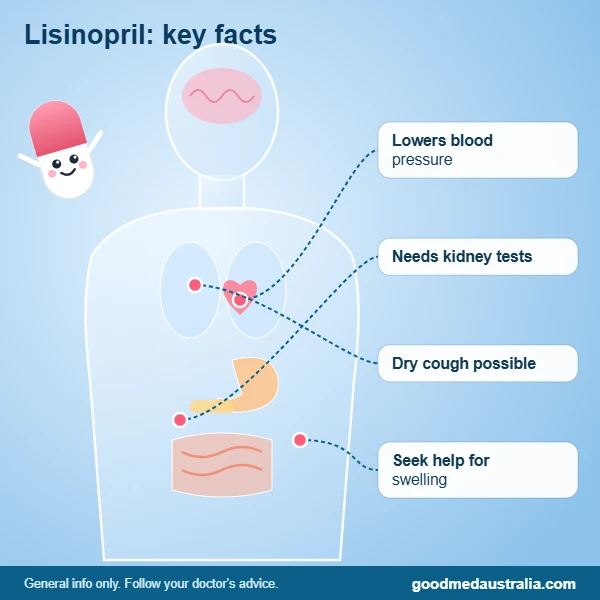
Key points at a glance
- Lowers blood pressure and protects the heart and kidneys.
- A dry cough is a common side effect.
- Needs kidney and potassium blood tests.
- Not for use in pregnancy.
- Seek urgent help for face or tongue swelling.
Side effects
- Dry cough
- Dizziness
- Headache
- Tiredness
Safety
- Avoid potassium supplements unless advised.
- Take care with anti-inflammatory painkillers.
- Stand up slowly.
Combination tablets
Lisinopril with hydrochlorothiazide (Angiotensin H) adds a water tablet for extra blood pressure control.
Related guides: sacubitril/valsartan.
Frequently asked questions
Why do I have a cough?
ACE inhibitors can cause a dry cough; your doctor may switch you.
Can I take it with ibuprofen?
Use caution; ask your pharmacist.
When should I take it?
At the same time each day.
Is it safe in pregnancy?
No.
Find more trusted, plain-English health guides at goodmedaustralia.com.
In an emergency, call triple zero (000). For health advice, call Healthdirect on 1800 022 222.
Based on: Australian product information for lisinopril; Heart Foundation. General education does not replace individual medical advice. Updated November 2026.