
Sorry, nothing in cart.
Blog

Every weight loss approach, from diets to medicines, works by creating an energy deficit. Understanding it takes the mystery out of weight loss.
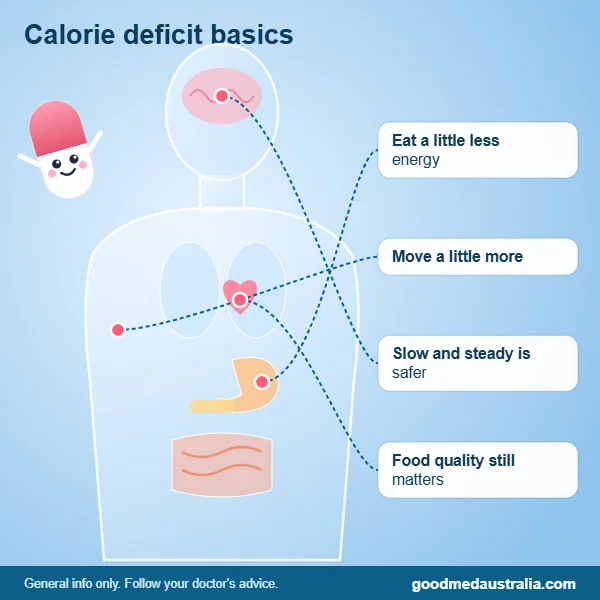
Key points at a glance
- A deficit means using more energy than you take in.
- Australia uses kilojoules (1 calorie is about 4.2 kJ).
- A modest deficit is more sustainable than an extreme one.
- A safe rate for most people is about 0.5 to 1 kg a week.
- Protein, fibre and whole foods make a deficit easier to stick with.
Ways to create a deficit
- Smaller portions and fewer sugary drinks.
- More vegetables and protein to stay full.
- Daily movement and strength training.
- Limit alcohol.
Pitfalls
- Very low intakes cause muscle loss and fatigue.
- Weekend overeating can cancel weekday efforts.
- Liquid kilojoules add up fast.
Read: healthy weight loss, high-protein eating and weight loss plateaus.
Frequently asked questions
How big should my deficit be?
A moderate deficit suits most people; a dietitian can personalise it.
Do I need to count calories?
Not always; portion and food choices can work too.
Why am I not losing weight in a deficit?
Fluid shifts, underestimating intake or muscle gain can hide progress.
Is a deficit safe in pregnancy?
No; get medical advice.
Find more trusted, plain-English health guides at goodmedaustralia.com.
In an emergency, call triple zero (000). For health advice, call Healthdirect on 1800 022 222.
Source: Eat for Health Australian Dietary Guidelines. General education does not replace individual medical advice. Updated November 2026.