
Sorry, nothing in cart.
Blog

For many people with type 2 diabetes, the most worrying thing about glimepiride is a feeling that arrives suddenly: shaky hands, a cold sweat, a pounding heart. That is low blood sugar, the best-known risk of this medicine, and it is also the one people can best prepare for. Knowing what it feels like, what makes it more likely and what else to watch for makes the medicine easier to live with.
This article is general education, not personal medical advice. Your doctor or pharmacist knows your health history and can tell you what applies to you.
What glimepiride is approved for
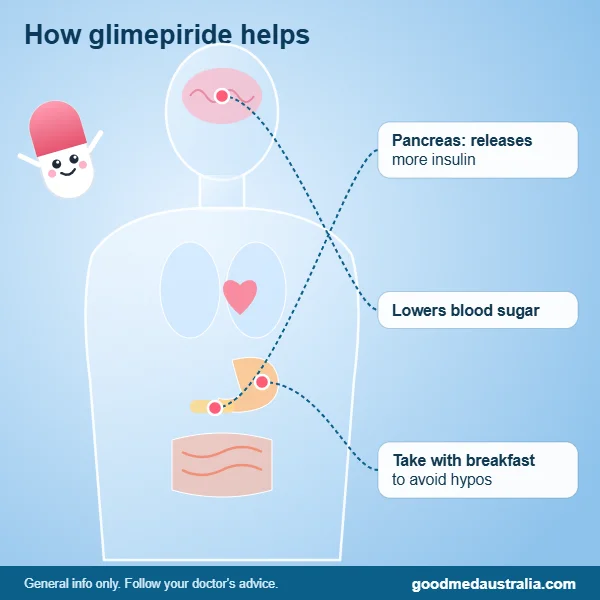
Glimepiride is a sulfonylurea. It is approved by regulators including Australia’s TGA and the US FDA as an add-on to diet and exercise, to lower blood glucose in adults with type 2 diabetes. It works by prompting the pancreas to release more insulin.
That mechanism explains most of its side effects. More insulin lowers blood sugar, which is the point, but it can also push blood sugar too low or encourage the body to store energy as fat.
Low blood sugar: the main risk
Low blood sugar (hypoglycaemia, or a “hypo”) is the most frequent and clinically significant side effect of glimepiride. Symptoms range from mild to severe.
| Level | What people may notice |
|---|---|
| Mild to moderate | Tremors or shakiness, sweating, hunger, dizziness, a rapid heartbeat |
| Severe | Confusion, slurred speech, seizures, loss of consciousness |
Treat a hypo promptly according to your diabetes action plan. If fully awake and able to swallow safely, use fast-acting glucose. If drowsy, unconscious or unable to swallow, give nothing by mouth and call 000. Recurrent hypos need prompt medical review.
What makes a hypo more likely
The research points to three main situations: skipped meals, intense physical activity and alcohol. Here are some illustrative scenarios (not real cases):
- A missed lunch. Someone busy at work pushes lunch back by hours. The medicine is still working, but there is less food to balance it.
- An unusually hard workout. A long, strenuous session, much harder than their usual routine, can use up glucose faster than expected.
- Drinks with dinner. Alcohol combined with glimepiride raises the chance of a severe hypo.
Many general guides mention that glimepiride is usually linked to breakfast or the first main meal of the day. Check your Consumer Medicine Information (CMI) leaflet and follow your prescriber’s instructions for your own situation.
Weight gain
Because glimepiride raises circulating insulin, it can promote fat storage in cells. The result is moderate weight gain in some people, though not everyone. If you notice a steady change on the scales, mention it at your next review rather than stopping or adjusting the medicine yourself. Your doctor can weigh up your options.
Sun sensitivity: an Australian consideration
Glimepiride can make skin more sensitive to ultraviolet light, which can lead to rashes, redness or severe sunburn. In a country with high UV levels, that matters more than it might in other places. The Consumer Medicine Information (CMI) leaflets flag this effect.
Think of a day at the beach or a weekend of gardening. Someone who normally copes with an hour outside might burn faster than usual. Sun-protective habits such as shade, hats, covering clothing and sunscreen are sensible, and a pharmacist can talk through what suits you.
Less common but serious risks
These effects are much rarer, but they are worth knowing about:
- G6PD deficiency. People with this inherited enzyme deficiency face a risk of haemolytic anaemia, where red blood cells break down too quickly. If you have been told you have G6PD deficiency, make sure every prescriber knows.
- Liver and kidney function. Older adults and people with liver or kidney impairment need extra monitoring, because the body may clear the drug more slowly.
- Liver problems, blood disorders and severe allergic reactions. These are listed among the serious risks that need prompt medical attention, so do not wait for a routine appointment.
Milder effects such as nausea, headache and temporary dizziness are commonly reported. Even so, persistent or bothersome symptoms are worth raising with your pharmacist.
Approved use and herbal products
Herbal supplements should not be confused with prescription diabetes treatment.
Traditional use
There is none. Glimepiride is a purely synthetic pharmaceutical with no herbal or traditional history. Herbal products promoted for blood sugar are a different matter and should not be assumed to behave like glimepiride, or to be safe alongside it. Tell your pharmacist about any supplements you take.
Proven, approved use
The approved indication is limited to adults with type 2 diabetes, alongside diet and exercise.
When to speak to a doctor or pharmacist
- Call 000: confusion, slurred speech, seizure or loss of consciousness.
- Seek prompt medical advice: signs of a severe allergic reaction, or symptoms that could point to liver or blood problems.
- Arrange prompt review: repeated mild hypos; your treatment may need adjustment. Discuss weight changes, sun reactions, alcohol and exercise with your treating team.
Frequently asked questions
Can I drink alcohol while taking glimepiride?
Alcohol is linked with a higher risk of severe low blood sugar when combined with this medicine. Ask your doctor or pharmacist what is appropriate for you.
Is the weight gain permanent?
The research does not say it is permanent, and not everyone gains weight. If it concerns you, talk to your doctor rather than changing your medicine yourself.
Where can I find official information?
Ask your pharmacist for the Consumer Medicine Information (CMI) leaflet for your specific brand. It is the Australian reference for your medicine.
Conclusion
Glimepiride’s risks follow largely from how it works. Low blood sugar is the main one, shaped by meals, activity and alcohol. Weight gain and sun sensitivity are also worth planning for, particularly under Australian UV conditions. Rarer problems, including haemolytic anaemia in people with G6PD deficiency, call for the right information in the right hands. Read your CMI leaflet, keep your prescriber and pharmacist informed, and ask questions early.
Medicine information and further reading
- MedlinePlus glimepiride information
- Healthdirect: recognising and treating hypoglycaemia
Explore more health guides and our frequently asked questions. This article is general education and does not replace advice from your doctor or pharmacist.
Related medicine safety guides
These guides explain different medicines; linking them does not mean they are interchangeable or suitable for the same person.
Find more trusted, plain-English health guides at goodmedaustralia.com.