
Sorry, nothing in cart.
Blog

Pancreatitis is a rare but serious side effect reported with GLP-1 medicines. Knowing the signs helps you act quickly.
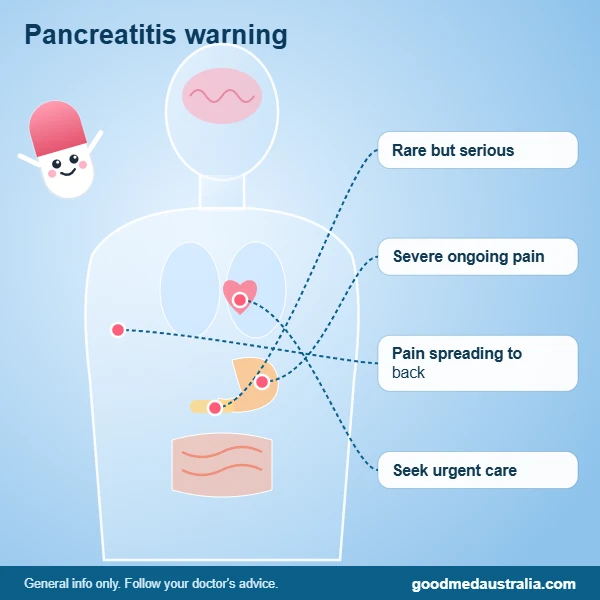
Key points at a glance
- Pancreatitis is rare but can be serious.
- Main sign: severe, ongoing tummy pain, often spreading to the back.
- Vomiting may also occur.
- Stop the medicine and seek urgent care if it happens.
- Tell your doctor about past pancreatitis or gallstones.
Symptoms
- Severe upper tummy pain that does not go away.
- Pain spreading to the back.
- Nausea and vomiting.
- Fever or fast heartbeat.
Who may be at higher risk
- Past pancreatitis.
- Gallstones.
- Heavy alcohol use.
- Very high triglycerides.
Not every tummy ache is pancreatitis
Mild nausea and discomfort are common with GLP-1s and usually settle. Severe, persistent pain is different and needs urgent assessment.
Related guides: gallbladder problems on GLP-1s and managing nausea.
Frequently asked questions
How common is pancreatitis?
It is rare.
Can I restart after pancreatitis?
Usually not; your doctor will advise.
Does alcohol increase risk?
Heavy drinking increases pancreatitis risk.
What should I do with severe pain?
Stop the medicine and seek urgent care or call 000.
Find more trusted, plain-English health guides at goodmedaustralia.com.
In an emergency, call triple zero (000). For health advice, call Healthdirect on 1800 022 222.
Based on: TGA product information for semaglutide and tirzepatide; Healthdirect. General education does not replace individual medical advice. Updated November 2026.