
Sorry, nothing in cart.
Blog

Hay fever (allergic rhinitis) affects about 1 in 5 Australian adults. Despite the name, it involves no hay and no fever.
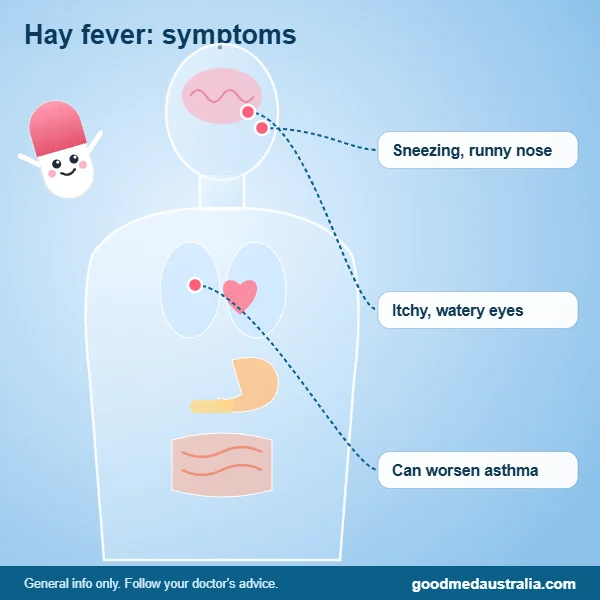
What are the symptoms?
An itchy, runny or blocked nose, sneezing, and itchy or watery eyes. Severe cases can affect sleep and concentration.
What triggers it?
Triggers include pollen, dust mites, animal dander and mould. Which trigger matters depends on your allergy and environment.
What can I do at home?
- Stay indoors on windy, high-pollen days and during thunderstorms
- Shower and rinse your eyes after being outside
- Wash bedding weekly in hot water
- Use saline nasal sprays or rinses
What treatments are available?
Steroid nasal sprays, antihistamines and combination sprays. Use decongestant sprays for a few days only. Immunotherapy may help some people and is started by a specialist. Read our antihistamine comparison.
When should I see a doctor?
Seek advice when symptoms affect sleep or daily life, persist despite treatment, or coexist with asthma. Do not wait for a fixed number of weeks if breathing is affected.
In an emergency, call triple zero (000). For health advice, call Healthdirect on 1800 022 222.
Source: Healthdirect: Hay fever. General education does not replace individual medical advice. Updated November 2026.
Find more trusted, plain-English health guides at goodmedaustralia.com.
For nasal rinses, use sterile or distilled water, or tap water that has been boiled and cooled. Follow the device’s cleaning instructions.
Find more health and medicine guides and our website FAQs.
See HealthyWA guidance on safe nasal irrigation.