
Sorry, nothing in cart.
Blog
Magnesium Glycinate: Why Everyone Is Talking About It (and What the Evidence Really Says)
-
Posted by

16
Nov
Scroll any wellness feed and magnesium glycinate pops up as the “chill pill” for sleep, stress and sore muscles. It is one of the most searched supplements in Australia. But what is it, and is the hype justified? Here is the straight-talking guide.
Key points at a glance
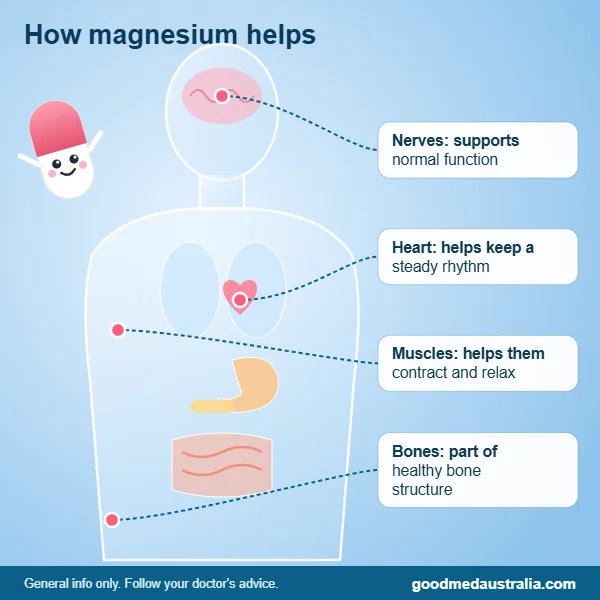
- Magnesium is an essential mineral for muscles, nerves, heart rhythm, blood sugar and bones.
- Glycinate is magnesium bound to the amino acid glycine, a form often chosen because it tends to be gentler on the stomach.
- Most adults can get enough magnesium from food; supplements help mainly if intake is low.
- Adults should keep supplemental magnesium to 350 mg a day unless a doctor advises more.
- People with kidney disease should not take magnesium without medical advice.
What is magnesium glycinate?
Magnesium supplements come in many “salt” forms: oxide, citrate, chloride, glycinate and more. The form changes how well it is absorbed and how it treats your gut. Citrate, chloride and similar forms are absorbed better than oxide. Glycinate (also called bisglycinate) is a chelated form that many people find causes less diarrhoea than oxide, although head-to-head research is limited.
What can it help with?
- Low magnesium levels: the clearest reason to supplement, for example with poor diet, some long-term medicines or gut conditions.
- Migraine prevention: headache societies rate magnesium as probably effective, but the doses used are higher than the usual supplement limit, so do this with a doctor.
- Muscle cramps: cramps can be a sign of low magnesium, but evidence that supplements fix everyday cramps is mixed.
- Sleep and stress: popular claims, but good-quality evidence is still thin. It may suit some people; it is not a sleeping tablet.
How much is safe?
In Australia the upper limit for magnesium from supplements is 350 mg a day for adults (food magnesium does not count towards this). Check the label for “elemental magnesium”, because a 400 mg magnesium glycinate tablet may contain much less actual magnesium than the headline number. If you want to take more than 350 mg of elemental magnesium, talk to a pharmacist or doctor first.
Side effects
- Loose stools or diarrhoea, nausea and stomach cramps, especially at higher doses.
- Very high doses (usually from laxatives or antacids) can cause low blood pressure, vomiting, irregular heartbeat and breathing problems.
Who should check first?
- Anyone with kidney disease, as the body cannot clear extra magnesium properly.
- People taking tetracycline or quinolone antibiotics: take the antibiotic at least 2 hours before or 4 to 6 hours after magnesium.
- People taking osteoporosis medicines (bisphosphonates): separate by at least 2 hours.
- People on diuretics or long-term reflux medicines (PPIs).
- Pregnant or breastfeeding women.
Food first
Leafy greens, nuts, seeds, legumes, wholegrains and dark chocolate are all rich in magnesium. If your diet is varied you may not need a supplement at all.
Looking for a supplement? See our Magnesium Glycinate 400 mg and ask our pharmacist if it suits you.
Frequently asked questions
Is magnesium glycinate better than magnesium oxide?
Oxide is absorbed less well and is more likely to loosen stools. Glycinate is often preferred for daily use, although direct comparison studies are limited.
When is the best time to take it?
Any time that suits you. Many people take it in the evening. Taking it with food can reduce stomach upset.
Can I take it every day?
Yes, within the 350 mg supplemental limit, unless your doctor advises otherwise.
Does it interact with medicines?
Yes. It can reduce absorption of some antibiotics and osteoporosis medicines, so space them apart and ask your pharmacist.
In an emergency, call triple zero (000). For health advice, call Healthdirect on 1800 022 222.
Source: NIH Office of Dietary Supplements magnesium fact sheet; Healthdirect. General education does not replace individual medical advice. Updated November 2026.
Find more trusted, plain-English health guides at goodmedaustralia.com.