
Sorry, nothing in cart.
Blog

Ondansetron Side Effects: Uses, Risks and Safety Tips
Most people who search for ondansetron have been handed a script, or a relative has, and the leaflet looks more worrying than the medicine feels. The usual questions are whether it will cause headaches or constipation, whether it’s safe in pregnancy, and why it’s being used for a child’s stomach bug when it’s “meant” for chemotherapy.
This article explains what ondansetron is, what it’s approved for, which uses are off-label, and which side effects and interactions matter most. It is general education only, not personal medical advice.
What ondansetron is
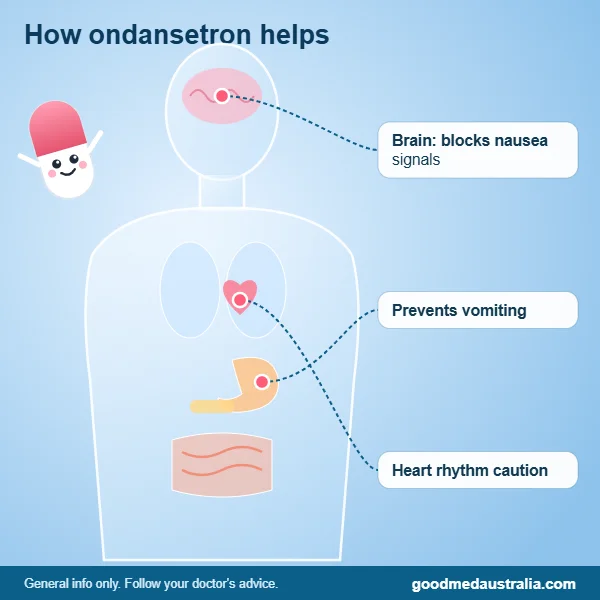
Ondansetron belongs to a group of medicines called serotonin 5-HT3 receptor antagonists. It blocks serotonin signals in the gut and brain that can trigger nausea and vomiting.
In Australia it is a Schedule 4 (Prescription Only) medicine. You can’t buy it over the counter, and a prescriber needs to decide whether it suits you.
It is also a purely modern, synthetic medicine, developed in the late 20th century. It has no traditional or herbal use, so there is no folk-remedy history to weigh up.
Approved uses versus off-label uses
This is where many online articles blur the lines, so it helps to separate them.
Approved uses (TGA-approved)
- Preventing and managing nausea and vomiting caused by cytotoxic chemotherapy
- Preventing and managing nausea and vomiting caused by radiation treatment
- Preventing and treating post-operative nausea and vomiting
Off-label and early-evidence uses
- Severe morning sickness (hyperemesis gravidarum): Doctors sometimes prescribe it off-label when first-line treatments haven’t worked. A medical practitioner needs to weigh the benefits against the risks, because research into safety for the baby is still ongoing.
- Gastroenteritis in children: It may be used under specialist guidance or hospital protocols to reduce vomiting and help with oral rehydration.
Traditional use: None.
Motion sickness isn’t among the approved uses listed above. “Off-label” doesn’t mean improper, but it does mean the decision rests on a clinician’s judgement of your situation. It isn’t something to borrow from a friend’s prescription.
Common side effects
The commonly reported effects are generally the milder ones:
- Headache
- A warm or flushing sensation
- Constipation
- Diarrhoea
- Dry mouth
Constipation and diarrhoea sit on opposite sides, and either can happen. If you’re already unwell with a gut illness or dehydrated from vomiting, it can be hard to tell whether a symptom comes from the illness or the medicine. A pharmacist can help you sort that out.
Many people ask about drowsiness. It isn’t among the commonly listed effects in the sources reviewed for this article, but individual responses vary. The Consumer Medicine Information (CMI) leaflet that comes with your medicine is the most reliable place to check the full list for your specific product.
The risks worth knowing about
Most people will never encounter the serious risks, but they are the ones that justify the prescription-only status.
Heart rhythm (QT prolongation)
Ondansetron can cause changes in heart rhythm known as QT prolongation, which in rare cases can progress to a dangerous rhythm called Torsade de Pointes. The risk is higher in people with existing heart conditions or electrolyte imbalances.
Electrolyte imbalance matters here because vomiting and diarrhoea, the very problems ondansetron is used for, can upset the body’s salts. Tell your prescriber if you have a heart condition or a history of rhythm problems.
Serotonin syndrome
Combining ondansetron with other serotonergic medicines, such as SSRI or SNRI antidepressants, increases the risk of serotonin syndrome. This doesn’t mean everyone on an antidepressant is barred from ondansetron. It means the prescriber and pharmacist need to know about it so they can make an informed decision.
Apomorphine
Ondansetron must not be taken with apomorphine, a Parkinson’s disease medicine, because the combination can cause severe drops in blood pressure.
Practical safety tips
- Share your full medicine list. That includes antidepressants, Parkinson’s medicines, and anything you take for your heart. Mention supplements too. Pharmacists check for interactions routinely, but only with the information you give them.
- Mention heart history. If you’ve ever been told you have a heart rhythm problem, or you’ve had blood tests showing low potassium or magnesium, say so before the prescription is filled.
- Read the CMI. Every prescription medicine in Australia has Consumer Medicine Information. It lists side effects more completely than any general article can, and it matches your exact product (tablet, wafer that dissolves on the tongue, or injection).
- Don’t self-direct off-label use. For example, a parent whose child has a vomiting bug shouldn’t use leftover ondansetron from another family member. In children, it’s used under specialist guidance or hospital protocols. If vomiting is persistent, the priority is having the child assessed.
- Pregnancy needs a conversation, not a guess. If you’re pregnant and struggling with severe nausea, talk to your doctor early. Ondansetron is generally considered only when first-line options haven’t helped, and the decision involves weighing benefits against risks that are still being researched.
- Don’t stop or change medicines on your own. If a side effect bothers you, ask your doctor or pharmacist first.
Frequently asked questions
Can I buy ondansetron at the pharmacy without a prescription?
No. It is Schedule 4, so it requires a prescription.
Is ondansetron safe in pregnancy?
It is sometimes prescribed off-label for severe morning sickness when first-line treatments fail, but the doctor must assess the benefits and risks because research into fetal safety is ongoing. This is a decision to make with your doctor.
Can it be used for gastroenteritis in children?
It is used in some cases under specialist guidance or hospital protocols to reduce vomiting and help children take fluids. This is an off-label use, not an approved indication.
Does it interact with antidepressants?
It can. Combining it with serotonergic medicines such as SSRIs and SNRIs raises the risk of serotonin syndrome. Always tell your prescriber and pharmacist what you take.
Can it affect my heart?
Yes, it can cause QT prolongation, particularly in people with existing heart conditions or electrolyte imbalances.
The bottom line
Ondansetron is a well-established anti-nausea medicine with clear approved uses in chemotherapy, radiation treatment and post-operative recovery. Its common side effects, such as headache, flushing, constipation, diarrhoea and dry mouth, tend to be manageable. The more serious concerns are heart rhythm changes, serotonin syndrome and the apomorphine interaction, and all of them depend on your health history and other medicines.
If you’ve been prescribed ondansetron, or you’re wondering whether it might suit a situation like morning sickness or a child’s vomiting, speak to your doctor or pharmacist. They can check it against your full health picture, which no general article can do.
This article is for general education only and isn’t a substitute for professional medical advice.
Sources referenced: Healthdirect Australia; Australian Commission on Safety and Quality in Health Care; Perth Children’s Hospital; Mayo Clinic
Source links and urgent symptoms
Seek urgent care for fainting, a new irregular heartbeat, severe agitation with fever or muscle stiffness, or an allergic reaction. For severe breathing difficulty or collapse, call 000 in Australia.
- Zofran Australian medicine information: uses, interactions and side effects
- Ondansetron Australian medicine information
For more general medicine information, visit our Health Guides and frequently asked questions.
Also read: Ondansetron: Uses, Side Effects and Precautions.
Find more trusted, plain-English health guides at goodmedaustralia.com.