
Sorry, nothing in cart.
Blog

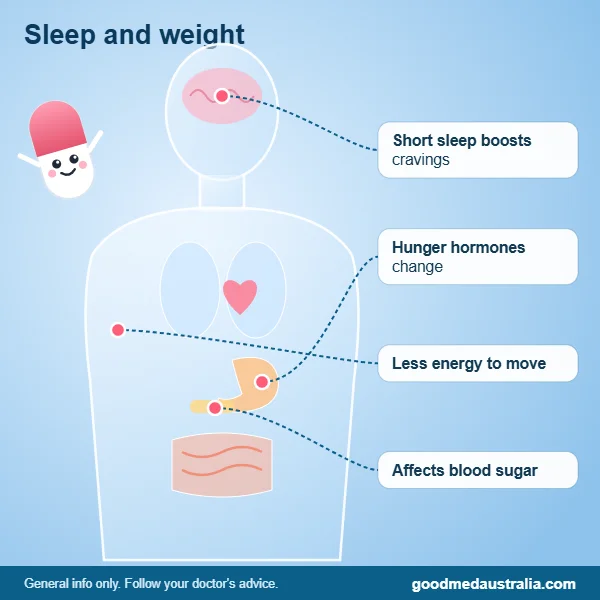
Struggling with weight despite eating well? Sleep may be the missing piece. Poor sleep affects hunger hormones, cravings and energy.
Key points at a glance
- Short sleep is linked with weight gain.
- Lack of sleep raises hunger hormones and cravings for sugary foods.
- Tiredness reduces activity.
- Adults generally need 7 to 9 hours.
- Conditions like sleep apnoea are linked with weight and need treatment.
Sleep tips
- Keep a regular bedtime and wake time.
- Limit caffeine after midday and alcohol at night.
- Keep screens out of the bedroom.
- Get morning daylight.
- See a GP for snoring or long-term insomnia.
Read: insomnia tips, sleep apnoea and emotional eating.
Frequently asked questions
Can sleeping more help me lose weight?
Better sleep can support weight loss by reducing cravings and improving energy.
Does late eating cause weight gain?
Total intake matters most, but late eating can affect sleep and reflux.
Do sleeping pills help weight?
No; focus on sleep habits and underlying causes.
How much sleep do I need?
Most adults need 7 to 9 hours.
Find more trusted, plain-English health guides at goodmedaustralia.com.
In an emergency, call triple zero (000). For health advice, call Healthdirect on 1800 022 222.
Source: Sleep Health Foundation. General education does not replace individual medical advice. Updated November 2026.