
Sorry, nothing in cart.
Blog

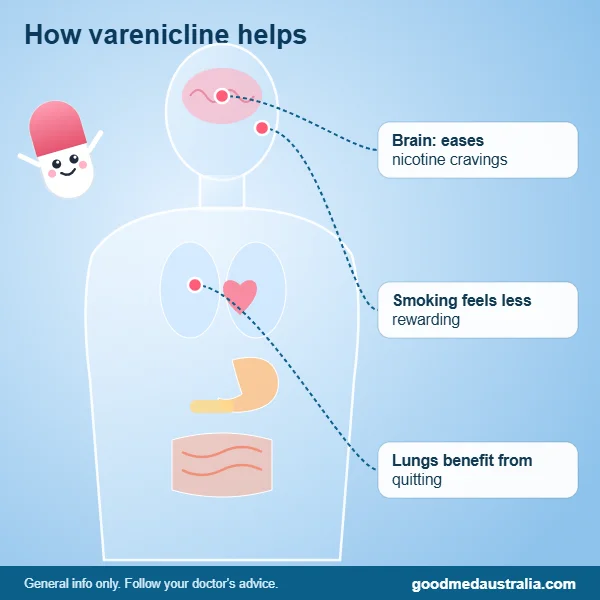
If you are thinking about using varenicline to quit smoking, or have just started, the side effects are probably what worry you most. The three that come up again and again are nausea, strange dreams and changes in mood. They are not equally common, and they are not equally serious. Knowing the difference helps you tell what is probably a nuisance from what needs a call to your doctor.
This article is general education only. It is not personal medical advice, and your doctor or pharmacist is the right person to talk to about your situation.
What varenicline is approved to do
Varenicline is a prescription medicine used to help adults stop smoking. Product brands and availability vary; check the exact leaflet supplied by your pharmacist.
Because it is a laboratory-made pharmaceutical, it has no traditional, herbal or Indigenous history of use. Everything known about its effects comes from clinical trials and safety monitoring.
Nausea: the most common complaint
Nausea is the side effect reported most often, affecting roughly 30% of users in clinical trials. That means most people do not get it, but a sizeable minority do.
The widely recommended approach is to take the tablet with food and a full glass of water, rather than on an empty stomach. If you are prone to queasiness, it is worth asking your pharmacist how to fit the tablets around your meals. Do not adjust the schedule or amount on your own. If nausea is persistent or hard to tolerate, tell your doctor rather than quietly stopping, because there may be options to discuss.
Vivid dreams and disrupted sleep
Insomnia and abnormal, vivid or unusual dreams affect more than 10% of people taking varenicline. These effects often appear early in treatment.
It is hard to say how much of this comes from the medicine and how much from quitting. Nicotine withdrawal can disturb sleep by itself, so someone who stops smoking can have a rough few nights whatever they take. The research gives no fixed timeline for how long sleep changes last, so ask your pharmacist what to expect and when to check in if they persist.
Mood changes: where care matters most
This is the side effect that deserves the most attention. The TGA has updated the Product Information for varenicline to highlight that serious psychiatric symptoms have been reported. These include mood swings, severe anxiety, depression, agitation and suicidal thoughts.
The TGA advice is clear. If you notice atypical changes in mood or behaviour, stop taking the medicine and seek immediate medical care. Do not wait to see whether it passes.
Telling the cause apart
It is not always obvious why your mood has shifted. Mood fluctuations can come from:
- nicotine withdrawal itself
- an existing mental health condition
- the medication
These overlap, which is why professional oversight matters. A person who feels irritable and low in the first week of quitting may be experiencing ordinary withdrawal, but they cannot reliably judge that alone. Someone with a history of depression or anxiety should tell their doctor before starting, so the two of you can plan how to monitor.
Alcohol
Alcohol is often left out of articles on this topic. TGA guidance notes that drinking alcohol while taking varenicline can potentially heighten mood changes or behavioural shifts. If you drink, raise this with your doctor or pharmacist before you start.
Practical ways to prepare
- Read the Consumer Medicine Information (CMI). The Australian CMI is written for local patients and is more relevant than overseas leaflets. Much online content quotes US or UK warnings, such as the FDA’s, rather than the TGA framework.
- Keep a short note of symptoms. Jotting down when nausea, poor sleep or low mood starts, and how it relates to meals, tablets and cigarettes, gives your doctor something concrete to work with.
- Tell someone close to you. A partner, family member or friend may notice a change in behaviour or mood before you do.
- Plan for alcohol. Ask your pharmacist about it before you start, not after a rough weekend.
Frequently asked questions
Does taking varenicline with food help nausea?
Taking the tablet with food and a full glass of water is widely recommended to ease stomach discomfort. If nausea continues, speak to your doctor or pharmacist.
Are vivid dreams caused by the medicine or by quitting?
Both the medicine and nicotine withdrawal may disturb sleep. Tell your prescriber about persistent sleep problems. If sleepwalking occurs, stop varenicline and contact your doctor.
How long do side effects last?
Sleep and dream effects often appear early in treatment, but there is no single timeline that fits everyone. Your pharmacist or doctor can advise on what to expect for you.
When should I get help straight away?
If you develop severe mood or behaviour changes or thoughts of self-harm, stop varenicline and seek immediate medical care. Call 000 if there is immediate danger.
Sleepwalking
Stop varenicline and tell your doctor if sleepwalking occurs, particularly if there is a risk of injury.
Sources and further reading
Pharmacor Varenicline. Check the leaflet matching your exact product; formulations, approved uses and instructions can differ.
Explore more medicine safety guides or read our frequently asked questions.
General education only. This does not replace an individual assessment by a doctor or pharmacist. In an emergency in Australia, call 000.
Find more trusted, plain-English health guides at goodmedaustralia.com.