
Sorry, nothing in cart.
Blog

Nitrofurantoin Side Effects: What to Know When Treating a UTI
You’ve picked up a prescription for a urinary tract infection (UTI), and within a day or two something looks or feels different. Your urine is darker than usual, or your stomach is unsettled. Is that normal, or a reason to call someone?
Most nitrofurantoin side effects for a UTI are mild and short-lived. A small number are not, and knowing the difference helps you act sensibly without panicking or ignoring a real warning sign.
This article is general education only. It isn’t personal medical advice, and your doctor or pharmacist should guide any decision about your medicine.
What nitrofurantoin is, and what it isn’t
Nitrofurantoin is a prescription-only (Schedule 4) antibiotic in Australia. The TGA has approved it for treating and preventing lower urinary tract infections, meaning uncomplicated cystitis caused by susceptible bacteria.
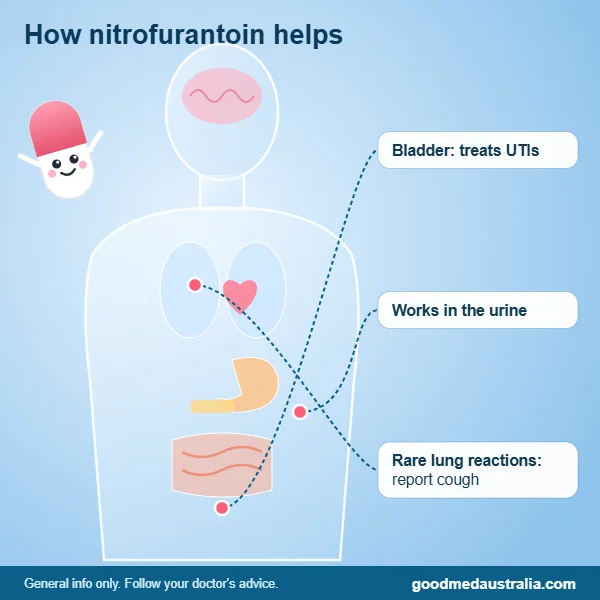
It works differently from many antibiotics. It clears quickly from the bloodstream and concentrates in the urine rather than in body tissues. That suits a bladder infection, but it also means nitrofurantoin is not approved or effective for upper urinary tract infections such as kidney infections (pyelonephritis), or for infections elsewhere in the body.
Here is how the evidence breaks down:
- Approved use: treating and preventing lower UTIs (uncomplicated cystitis) caused by susceptible bacteria.
- Early research: scientists are investigating combinations of nitrofurantoin with nanomaterials or plant extracts to tackle drug-resistant urinary bacteria. Researchers are also re-examining its safety in people with mild-to-moderate kidney impairment. These are research questions, not established uses.
- Traditional use: none. Nitrofurantoin is a synthetic nitrofuran antibiotic developed in the 1950s, with no herbal or complementary medicine origins.
The common side effects
Nausea, loss of appetite, flatulence and mild vomiting are among the most common short-term effects. Mild headache and general digestive upset are also frequently reported.
Taking the capsule with a meal or food can help cushion stomach irritation. If you’re feeling queasy, that’s a sensible thing to ask your pharmacist about, but don’t change how you take the medicine without their advice. Your prescription label is the authority on how to take your own supply.
Why your urine may change colour
Nitrofurantoin often turns urine dark yellow or brownish. This is a harmless result of how the body processes and excretes the drug, and it’s the effect people most often ask about.
Context matters, though. Brown urine on its own while you’re taking nitrofurantoin is expected. Dark urine that persists, particularly alongside pale stools, yellowing of the skin or eyes, or severe abdominal pain, is a different picture. Those signs can point to liver toxicity, and they need prompt medical attention.
A simple way to think about it: the colour alone isn’t the concern, but the colour combined with other symptoms might be.
Rare but serious reactions
Serious reactions are uncommon, but they’re worth knowing about:
- Lung (pulmonary) toxicity: cough, fever, chest pain or shortness of breath.
- Liver (hepatic) toxicity: jaundice, severe abdominal pain, or persistent dark urine with pale stools.
- Peripheral neuropathy: numbness or tingling in the hands or feet.
- Severe allergic reactions: such as rash, swelling or breathing difficulty.
Stop nitrofurantoin and seek immediate medical advice for new breathing symptoms, jaundice or new numbness or tingling. For severe breathing difficulty or a serious allergic reaction, seek emergency care immediately.
Short courses versus long-term use
Many articles blur two very different situations. A short course for an acute UTI is one thing. Long-term preventative (prophylactic) use, taken over months to reduce repeat infections, is another.
Lung and liver reactions can occur during short courses too, while prolonged use increases the risk. Long-term prophylactic use carries a higher risk of these reactions and calls for periodic medical monitoring. If you’ve been on nitrofurantoin for a long stretch, regular check-ins with your doctor matter, and new symptoms such as a persistent cough or breathlessness should be reported rather than put down to something else.
Who needs extra caution
Nitrofurantoin isn’t suitable for everyone. Contraindications include:
- Significantly reduced kidney function (low eGFR or creatinine clearance). Impaired kidneys can’t filter enough of the drug into the urine, so it may not work in the bladder, while the risk of toxicity in the rest of the body rises.
- Late pregnancy, at term or during labour, because of potential blood-related risks to the newborn.
- Infants under one month of age.
- G6PD deficiency.
That kidney point is worth understanding. Poor kidney function creates a double problem: less drug reaching the bladder, and more building up in the blood. If you have kidney problems, are pregnant or might be, are breastfeeding, or are an older adult, tell your prescriber and pharmacist so they can weigh up the options for you.
When to get advice
Practical examples of when to pick up the phone:
- You’re nauseated enough that you’re tempted to skip doses. Speak to your pharmacist first, since they can suggest ways to manage it.
- Your urine is dark and you also notice pale stools or yellowing skin. Contact a doctor promptly.
- You develop a new cough, fever or breathlessness while on the medicine. Seek medical advice.
- Your hands or feet start tingling or going numb. Let your doctor know.
- Your symptoms aren’t improving, or you develop signs that the infection may be spreading beyond the bladder. Nitrofurantoin isn’t intended for kidney infections, so you need to be reassessed.
Your pharmacist can also give you the Australian Consumer Medicine Information (CMI) leaflet for your medicine, which lists side effects in detail.
FAQ
Is dark urine from nitrofurantoin dangerous?
Dark yellow or brown urine is a common, harmless effect of how the drug is excreted. Persistent dark urine with pale stools or yellowing skin or eyes is different and needs medical attention.
Can I take it with food?
Taking the capsule with meals or food can help reduce stomach irritation. Follow the directions on your prescription label and check with your pharmacist if unsure.
Is nitrofurantoin safe in pregnancy?
It’s contraindicated in late pregnancy, at term or during labour. For any other stage of pregnancy, or if you’re breastfeeding, your doctor or pharmacist can advise on your situation.
Does it treat kidney infections?
No. It’s approved for lower urinary tract infections only, not for pyelonephritis or systemic infections.
The takeaway
Nitrofurantoin has a well-defined role: lower UTIs, with the drug concentrated where it’s needed, in the urine. Nausea and brownish urine are the effects most people will recognise, and both are usually manageable. The effects that deserve real attention are breathing or lung symptoms, liver warning signs, numbness or tingling and allergic reactions, especially with long-term use or reduced kidney function.
If you’re unsure about anything, speak to your doctor or pharmacist. Both can look at your health history and your prescription in a way no general article can.
Sources for further reading
- Healthdirect Australia: Nitrofurantoin medicine overview
- Australian Commission on Safety and Quality in Health Care
- Medsafe: Spotlight on nitrofurantoin
- MSD Manual Professional Edition: Nitrofurantoin
For more general medicine information, visit our Health Guides and frequently asked questions.
Related guides
- Amoxicillin: Uses, Side Effects and Precautions
- Azithromycin Side Effects: Common vs Serious
- Doxycycline Side Effects: Sun Sensitivity and Stomach Upset
Find more trusted, plain-English health guides at goodmedaustralia.com.