
Sorry, nothing in cart.
Blog

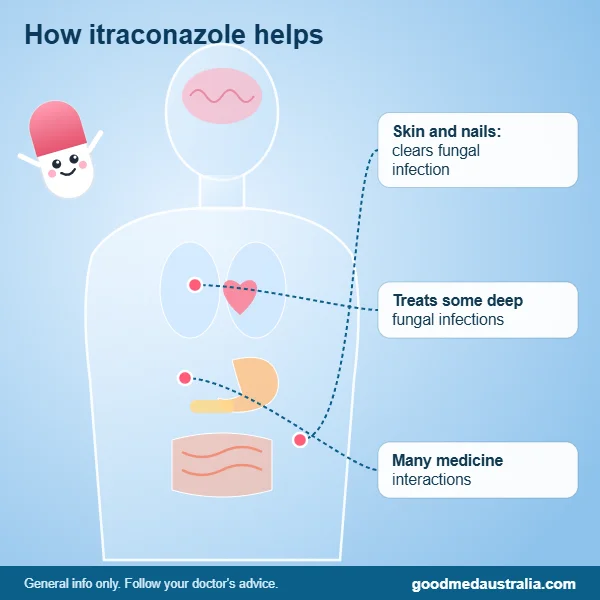
If you have been prescribed itraconazole, the leaflet in the box can be unsettling. It mentions the liver, the heart and a long list of other medicines. Most of those warnings have a clear explanation behind them, and knowing it makes it easier to ask your doctor or pharmacist the right questions. This article is general education, not personal medical advice.
What itraconazole is, and what it is approved for
Itraconazole is a prescription-only triazole antifungal. In Australia it is sold under brand names including Sporanox, Itracap and Itrazo, as well as generics. Its approved uses include:
- systemic fungal infections such as aspergillosis, histoplasmosis and sporotrichosis
- superficial fungal infections
- oral and vulvovaginal candidiasis
- fungal nail infections (onychomycosis) when topical treatment is ineffective or inappropriate
Common side effects versus serious ones
Most people who notice side effects have mild, short-lived ones: nausea, stomach upset, diarrhoea or headache. These are worth mentioning to your pharmacist, especially if they persist, but they are not usually a cause for alarm.
The rarer serious risks are different in kind. They include congestive heart failure, allergic reactions, severe skin reactions and liver injury. Because these are uncommon, the useful skill is recognising them early, not worrying about them daily.
Liver safety: a common blood test finding versus a rare serious problem
Liver is the part of the story where many articles either say too little or sound alarming. The research draws a useful line between two very different things.
Temporary enzyme changes
Liver enzyme changes may appear on blood tests without obvious symptoms. Your clinician decides whether baseline and follow-up liver tests are needed, taking account of your health and treatment duration.
Serious liver injury
Severe hepatotoxicity, including liver failure, is a rare but documented risk. This is why doctors take liver function tests (LFTs) seriously. The guidance described in the research recommends a baseline LFT and periodic follow-up tests for people on continuous treatment beyond a month, or who already have liver impairment.
The warning signs to act on are:
- yellowing of the skin or eyes (jaundice)
- dark urine
- severe tiredness
- pain in the upper abdomen
Stop itraconazole and obtain urgent medical advice if symptoms suggest liver injury, such as jaundice, dark urine, marked fatigue or loss of appetite. Do not wait for the next blood test.
Why interactions matter: the CYP3A4 explanation
Interaction lists can look arbitrary until you know the mechanism. Itraconazole strongly inhibits CYP3A4, a liver enzyme system that helps the body break down many medicines. When that enzyme is blocked, other drugs that rely on it can build up in the blood to higher levels than intended.
Medicines named in the research as affected include:
- simvastatin and lovastatin (cholesterol medicines)
- oral midazolam and triazolam (sedatives)
- felodipine (a blood pressure medicine)
- ticagrelor (a blood thinner)
- ergot alkaloids
Higher levels can mean a greater risk of serious toxicity. Think of it as a drain partly blocked: everything that normally flows through it backs up.
An illustrative example: someone who takes a statin every day for cholesterol might not think of it as relevant to a fungal nail prescription. Because of the CYP3A4 effect, it is exactly the sort of medicine a pharmacist will want to know about. The same applies to a sedative taken occasionally for sleep or anxiety.
Absorption: why stomach acid and food come up
Food instructions depend on the formulation. Conventional Sporanox capsules are taken after a full meal; capsules and oral solution are not interchangeable. Acid-reducing medicines can affect absorption. Do not routinely add an acidic drink without pharmacist advice.
This is why a pharmacist may ask about antacids or acid-reducing products, even though they seem unrelated. The practical point is not to guess. Check the instructions for your specific formulation with your pharmacist.
Heart precautions
Itraconazole can weaken heart pumping and can cause or worsen heart failure. Tell the prescriber about any history of heart failure before treatment. Restrictions depend on the indication and product information.
Stop itraconazole and seek immediate medical advice for new breathlessness, unexpected weight gain, leg swelling or other signs of heart failure. Severe breathing difficulty needs emergency care.
Making the most of your pharmacist and the paperwork
- Bring a full medicines list. Include over-the-counter products, antacids and supplements, not just prescriptions.
- Read the Consumer Medicine Information (CMI). The Australian CMI leaflet for your specific brand is the authoritative local reference.
- Mention your history. Liver disease, heart failure and past reactions to antifungals all matter.
- Report unexpected reactions. You can report suspected side effects to the Therapeutic Goods Administration (TGA), either yourself or through your health professional.
Frequently asked questions
Does itraconazole damage the liver?
Liver enzyme changes and rare serious liver injury are recognised risks. Monitoring and urgent assessment of warning symptoms matter.
Can I take my usual medicines with it?
That depends on the medicine. Several common ones, including some statins, sedatives and blood thinners, are affected by CYP3A4 inhibition. Ask your doctor or pharmacist to check your whole list.
Is itraconazole a natural or traditional remedy?
No. It is a synthetic medicine with no traditional use.
Conclusion
Itraconazole treats certain fungal infections but has important liver, heart and interaction risks. Bring a complete medicine list to your pharmacist and follow the instructions for the exact formulation supplied. Urgent warning symptoms require immediate assessment.
Medicine information and further reading
- Sporanox capsules Australian consumer leaflet
- DailyMed Sporanox label: heart and liver warnings (US)
Explore more health guides and our frequently asked questions. This article is general education and does not replace advice from your doctor or pharmacist.
Related medicine safety guides
These guides explain different medicines; linking them does not mean they are interchangeable or suitable for the same person.
Find more trusted, plain-English health guides at goodmedaustralia.com.