
Sorry, nothing in cart.
Blog

What clotrimazole cream is
Clotrimazole is a synthetic antifungal from the imidazole family, developed in the late 1960s. It has no history in traditional, Indigenous or herbal medicine. That matters because people sometimes assume anything sold for skin complaints has “natural” origins. Clotrimazole is a pharmaceutical ingredient, and it’s best judged on the evidence for medicines rather than on tradition.
In Australia, products containing it are regulated by the Therapeutic Goods Administration (TGA). Some are sold as Schedule 2 (Pharmacy Medicine) products, which means a pharmacist is available to answer questions. Make use of that.
Proven and approved uses
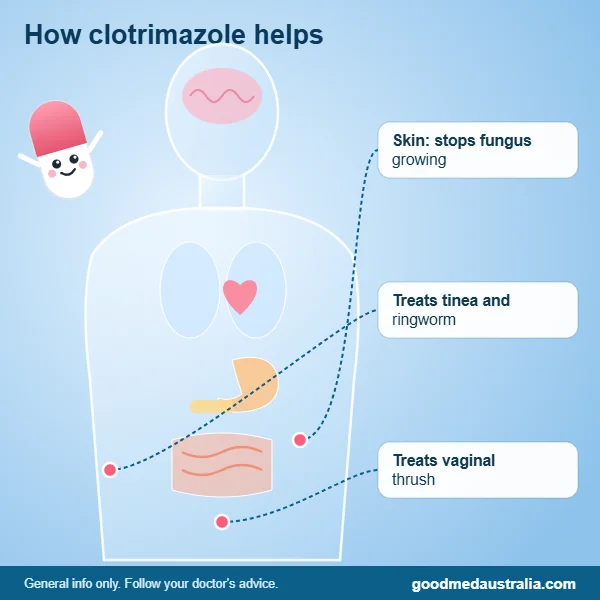
According to the TGA’s monograph for topical imidazole antifungals, clotrimazole cream is registered for fungal skin infections, including:
- Tinea: athlete’s foot (tinea pedis), jock itch (tinea cruris) and ringworm (tinea corporis)
- Candidal skin infections: external genital thrush and thrush-infected nappy rash
- Pityriasis versicolor, a fungal infection that causes patches of discoloured skin
It may be used for fungal infection in skin folds, rather than for every cause of intertrigo, and for superficial skin candidiasis. Vaginal thrush is covered by specific formulations, such as internal creams, pessaries and combined external creams, rather than by a general skin cream. The wording matters. These uses apply to confirmed fungal infections, and the right product depends on where the problem is.
How it works
Fungal cells are surrounded by a membrane that depends on a compound called ergosterol. Clotrimazole interferes with the production of ergosterol. Without it, the membrane becomes leaky and the fungal cell can no longer function and dies.
Human cells don’t use ergosterol in the same way, which is why the cream targets fungi rather than your own skin. That doesn’t make it free of side effects, but it explains the approach.
Practical situations where it helps to pause
These are general illustrations, not real cases.
A rash that doesn’t behave like a fungus. Someone develops an itchy, red patch and applies antifungal cream, assuming it’s tinea. If the cause is eczema, contact dermatitis or a bacterial infection, the cream may not help. It could delay proper care or irritate the skin further. A pharmacist or doctor can help confirm what you’re dealing with, which is the best way to avoid this.
Thrush and contraception. Clotrimazole creams used on or around the genital area can damage latex. That can weaken latex condoms and diaphragms, both during use and for several days afterwards, according to the NHS. This point is often left out of general articles. If you rely on latex contraception, ask your pharmacist about alternatives while using the product.
Nappy rash that looks “thrushy”. Nappy rash has several possible causes, and thrush is only one. Clotrimazole cream is registered for thrush-infected nappy rash, but a baby’s skin warrants professional advice about what’s going on first.
Safety tips
Pregnancy and breastfeeding. Topical clotrimazole is generally considered safe in pregnancy in Australia when used as directed, according to Healthdirect. Even so, speak to a doctor or pharmacist before starting, and mention if you’re breastfeeding.
Common side effects. These are usually mild and limited to the application site: temporary redness, mild burning or stinging. If irritation gets worse rather than settling, stop using the cream and get advice.
Serious reactions. Widespread hives or swelling can signal a severe allergic reaction and need immediate medical attention.
Tell your pharmacist the full picture. Mention any other medicines you take, existing skin conditions, pregnancy or breastfeeding. This helps them judge whether clotrimazole suits your situation.
Report problems. In Australia, suspected side effects can be reported to the TGA, which helps monitor medicine safety.
What if it doesn’t seem to work?
Fungal infections don’t usually clear overnight, but there’s a limit to how long you should persist. Stop and get advice if irritation worsens. If symptoms have not improved after seven days, see a doctor; otherwise follow your product’s full treatment instructions, which may run for several weeks. A lack of improvement is useful information. It may mean the diagnosis was wrong, the infection needs a different approach, or something else is going on.
FAQ
Is clotrimazole cream a natural product?
No. It’s a synthetic imidazole compound with no traditional or herbal use.
Can I use it for any itchy rash?
No. It’s approved for fungal skin infections. Using it on eczema, contact dermatitis or a bacterial infection may delay proper care or add to irritation.
Does it affect condoms?
Yes. Clotrimazole creams used in the genital area can damage latex condoms and diaphragms, reducing their reliability during use and for several days afterwards.
Is it safe in pregnancy?
It’s generally considered safe when used as directed, but check with a doctor or pharmacist first.
When should I see a doctor?
If irritation worsens, symptoms have not improved after seven days, or you notice signs of a severe allergic reaction such as widespread hives or swelling. Seek urgent help for the latter.
Conclusion
Clotrimazole cream has a clear, well-established role: it’s approved for confirmed fungal skin infections, and it works by disrupting the membranes fungi depend on. Its limits matter just as much. It doesn’t suit every rash, it can compromise latex contraception, and early laboratory research doesn’t amount to proven benefit. Before you start, a quick conversation with your pharmacist or doctor about the diagnosis, your other medicines and your circumstances is the simplest safety step you can take.
This article is for general education only and isn’t a substitute for advice from a doctor or pharmacist.
Sources
NHS: clotrimazole, uses and precautions. Check the leaflet for your exact formulation and contraception advice.
For more general medicine information, visit our Health Guides and frequently asked questions.
Related guides
- Terbinafine Cream: Uses, How Fast It Works
- Miconazole Cream Australia: Uses, Safety & Advice
- Ketoconazole Shampoo in Australia: Facts
Related medicine safety guides
These guides explain different medicines; linking them does not mean they are interchangeable or suitable for the same person.
Also read: Clotrimazole: Uses, Side Effects and Precautions.
Find more trusted, plain-English health guides at goodmedaustralia.com.