
Sorry, nothing in cart.
Blog

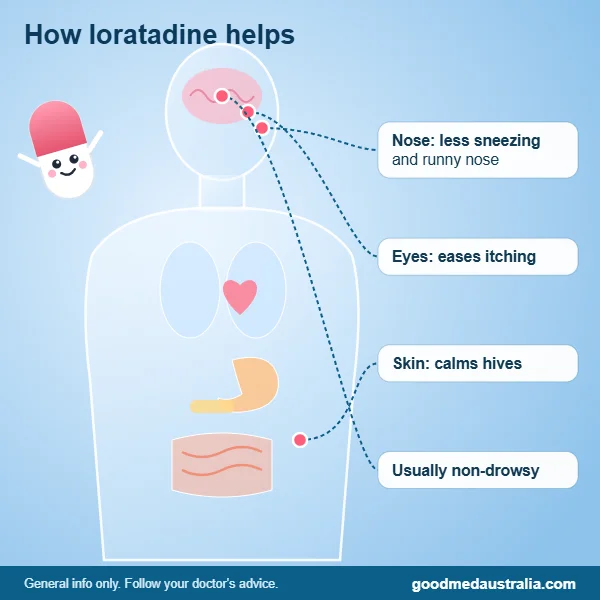
The “non-drowsy” label on a hay fever tablet sets an expectation: you take it, the sneezing eases, and you carry on with your day. For most people with loratadine that is roughly how it goes. But a small number of people still feel tired, and it helps to know what is normal, what is unusual and what needs urgent attention.
This article is general education only. It is not personal medical advice, and your doctor or pharmacist is the right person to ask about your situation.
What loratadine is, and what it is approved for
Loratadine is a second-generation antihistamine. It was developed in laboratory research in the late 20th century, so it has no traditional or herbal history. Any suggestion that it belongs to an older folk remedy tradition is simply wrong.
It helps to keep three levels of evidence apart:
- Traditional use: none. It is a synthetic medicine.
- Early research: laboratory and early clinical studies identified loratadine as a selective peripheral histamine H1-receptor antagonist. Because it does not readily cross the blood-brain barrier, these studies found much less central nervous system depression than with older antihistamines.
- Approved use: the Therapeutic Goods Administration (TGA) has approved loratadine for relieving the symptoms of allergic rhinitis (hay fever), such as sneezing, a runny nose and itchy, watery eyes, and for chronic hives (urticaria).
Why “non-drowsy” doesn’t mean “never drowsy”
Older antihistamines such as diphenhydramine and promethazine cross into the brain more easily, which is why they tend to cause marked sleepiness. Loratadine was designed to act mainly outside the brain, which is why it is far less sedating.
“Far less” is not “none”. Individual metabolic variation and differences in how much of the medicine reaches the brain mean a minority of people still feel mildly sleepy or fatigued. The label describes how the medicine behaves for most people, not a guarantee for every person.
Common side effects
The everyday effects are usually mild and temporary:
- Headache
- Fatigue
- Dry mouth
- Mild sleepiness
- Mild gastrointestinal upset
Because hay fever itself can cause headaches, tiredness and a dry mouth from breathing through the nose, it can be hard to tell whether a symptom comes from the allergy or the medicine. A simple note of when symptoms appear in relation to taking the tablet can give your pharmacist something concrete to work with.
Less common and rare effects at a glance
| Category | Examples | What it means |
|---|---|---|
| Common, mild | Headache, fatigue, dry mouth, mild sleepiness, mild stomach upset | Often settle on their own. Mention persistent or bothersome effects to a pharmacist. |
| Less common | Dizziness, nervousness, insomnia, elevated heart rate | Worth discussing with a doctor or pharmacist, particularly if they continue. |
| Rare, serious | Anaphylaxis: swelling of the lips, tongue or throat, severe breathing difficulty | Needs immediate emergency medical care. |
It may seem odd that an antihistamine can cause nervousness or insomnia when its older relatives cause sleepiness. These effects are uncommon, but they show that responses to the same medicine vary from person to person.
Driving, work and alcohol
Readers often ask whether loratadine is safe to take before driving, operating machinery or having a drink. The usual over-the-counter advice is to be careful with all three until you know how the medicine affects you. The reason is that the chance of sleepiness is low but not zero.
As an illustration, imagine someone who takes loratadine for the first time on a Saturday and notices a heavy, foggy feeling by mid-morning. A cautious person would stay off the road and avoid heavy machinery until the feeling passed, and would mention it to a pharmacist before taking another tablet. Trying a new medicine on a day without demanding tasks is a sensible habit. For anything specific about alcohol or your job, ask a pharmacist, because they can consider your other medicines too.
Who should check first
A few groups are advised to get professional advice before using loratadine:
- People with liver or kidney impairment. These organs help the body process and clear medicines, so loratadine may be handled differently.
- People who are pregnant or breastfeeding. Australian guidance is to speak with a GP or pharmacist, who can weigh the potential benefits and risks for you.
If you take other regular medicines, tell the pharmacist. It is the same conversation whether you are buying the tablets over the counter or being prescribed something.
Brand names and what to read on the pack
Loratadine is sold under several brand names in Australia, Claratyne among them. The active ingredient is listed on the pack, and checking it helps you avoid doubling up if you also use a combination cold and flu product. A pharmacist can confirm what is in each product you use.
Frequently asked questions
Is loratadine really non-drowsy?
For most people it causes little or no sleepiness, because it does not readily cross the blood-brain barrier. A minority still feel mildly sleepy or tired.
What side effects should I expect?
The most commonly reported are headache, fatigue, dry mouth, mild sleepiness and mild stomach upset. They are usually mild and short-lived.
Which symptoms need urgent help?
Swelling of the lips, tongue or throat, or severe difficulty breathing, may signal anaphylaxis. This is a rare but serious reaction that needs emergency medical care.
Is it the same as older antihistamines?
No. Diphenhydramine and promethazine are sedating, older antihistamines. Loratadine belongs to the newer second-generation group, which is why it has become a common choice where daytime alertness matters.
Is it a natural or traditional remedy?
No. It is a synthetic medicine with no traditional or herbal use.
The takeaway
Loratadine’s reputation is largely earned: it is far less sedating than older antihistamines, and its common side effects are usually mild. The label is still a generalisation, so watch how you feel, take extra care with driving and alcohol until you know your response, and treat any swelling of the face or throat, or breathing difficulty, as an emergency. If you have liver or kidney problems, are pregnant or breastfeeding, or are unsure about a symptom, talk to your doctor or pharmacist.
Further reading
- Healthdirect Australia: Antihistamines
- Australian Prescriber: Antihistamines and allergy
- Therapeutic Goods Administration (TGA)
- NHS UK: Side effects of loratadine
- Mayo Clinic: Loratadine precautions
Find more trusted, plain-English health guides at goodmedaustralia.com.