
Sorry, nothing in cart.
Blog

You have decided to quit smoking and started using a nicotine patch. A few days in, your skin is red and itchy where the patch sits, and you are waking at 3 am from dreams so vivid they feel like films. Are these normal side effects, a sign that something is wrong, or just nicotine withdrawal by another name?
Most nicotine patch side effects are mild and manageable, but telling them apart matters. Some come from the patch itself, some from too little nicotine, and a few mean you should get medical help promptly.
What nicotine patches are approved for
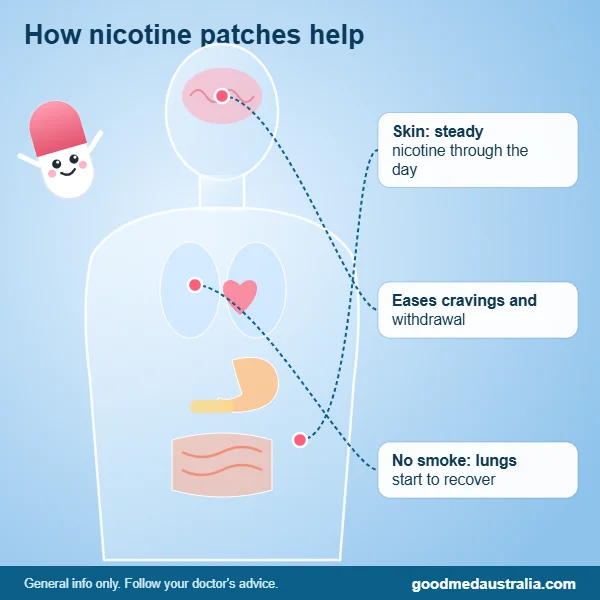
In Australia, nicotine transdermal patches are approved by the Therapeutic Goods Administration (TGA) as a non-prescription stop-smoking aid for tobacco dependence. They deliver nicotine slowly and steadily through the skin, which helps ease withdrawal symptoms and cravings. That is the proven, approved use, and it is the only one this article treats as established.
Serious side effects are rare, but the common ones are worth knowing about before you start.
Skin irritation: common, and often avoidable
Mild redness, itching or tingling under the patch is very common. The research suggests it affects up to 20% of users. It usually reflects the skin reacting to the patch and the nicotine at the application site.
Australian health guidance points to a few practical habits:
- Apply the patch to clean, dry, hairless, unbroken skin, such as the upper arm, chest or back.
- Change the application site each day rather than reusing the same spot.
- Avoid skin that is already irritated or damaged.
As an illustration, someone who sticks a patch on the same patch of upper arm every morning is more likely to end up with a sore, inflamed spot than someone who works through different areas of the arm, chest and back. Rotation gives the skin time to recover.
Mild local redness is different from a spreading rash, hives or significant swelling. Those can signal an allergic reaction, covered further below.
Sleep problems and vivid dreams
Nicotine is a stimulant, so wearing a patch overnight can cause lighter sleep, waking during the night or unusually vivid dreams. This is a recognised effect of 24-hour patches, and Australian Quitline guidance suggests removing a 24-hour patch before bed if sleep disturbances occur.
There is some research behind the vivid dreams, but it is early and physiological rather than a treatment guideline. Studies, including work associated with Monash University, show that 24-hour transdermal nicotine alters aspects of rapid eye movement (REM) sleep. In particular, it increased the vividness of visual imagery when people were woken during REM sleep. So the vivid dreams people report are not imagined, but this research does not tell you what to do about your own sleep. A doctor or pharmacist can.
16-hour vs 24-hour patches
Both types are available in Australia, and the difference matters for sleep.
| Patch type | What to know |
|---|---|
| 24-hour | Nicotine is delivered through the night, which may help with morning cravings but can disturb sleep or cause vivid dreams. |
| 16-hour | Designed for daytime wear and removed before bed, so overnight exposure is avoided. Morning cravings may be harder to manage. |
Neither is automatically better. Someone whose strongest cravings come first thing in the morning may weigh things differently from someone whose sleep is suffering. A pharmacist can talk through which suits your pattern and whether switching makes sense.
Side effect, withdrawal or too much nicotine?
This is where many people get confused, because the symptoms can overlap. A useful way to think about it:
- Too little nicotine (withdrawal): insomnia, irritability and headache.
- Too much nicotine: nausea, cold sweats, dizziness and a racing heartbeat.
Poor sleep and headaches could be either withdrawal or a patch effect, which is why guessing is unreliable. If you feel nauseous, clammy, dizzy or notice your heart racing, that points toward excess nicotine, and you should seek advice rather than push through. If you feel edgy and sleepless while under-supported, the answer may be different. Do not change your regimen on your own. Speak to a doctor or pharmacist, who can work out what is going on.
Safe use, removal and disposal
Safe use also means safe handling. Used patches still contain nicotine, which can poison children and pets.
- Fold a used patch in half with the sticky sides together.
- Dispose of it out of reach of children and pets.
- Keep unused patches stored away from them as well.
Pharmacists can also tell you about practical points such as using a patch alongside other products, or using one while pregnant or with a heart condition. Those questions are best answered individually.
When to get medical help
Seek immediate medical attention if you notice any of these while using a patch:
- A severe or spreading rash, or hives
- Significant swelling
- Chest tightness
- A rapid or irregular heartbeat
These are uncommon, but they are not symptoms to wait out.
Early research and unproven claims
You may come across online discussion of nicotine patches being used for other purposes, such as cognitive fatigue after long COVID. These ideas are experimental and unproven. The TGA has not approved patches for them, and there is no clinical consensus supporting them. Nicotine is not harmless simply because it comes in a patch, so these claims should not guide your decisions.
A note on traditional use
The tobacco plant, Nicotiana tabacum, has a long traditional history. Nicotine patches do not. They are a modern pharmaceutical product, developed in the late 20th century, and their place in quitting rests on modern evidence, not traditional practice.
Frequently asked questions
Is skin redness under a patch normal?
Mild redness, itching or tingling is common. Rotating the site daily and using clean, dry, hairless skin helps. A spreading rash, hives or severe swelling needs urgent medical attention.
Can I take the patch off at night?
Quitline guidance suggests removing a 24-hour patch before bed if sleep is disturbed. Ask a pharmacist or doctor whether a 16-hour patch might suit you better.
Are vivid dreams dangerous?
They are a recognised effect of overnight nicotine and are not usually a sign of serious harm. They can still disrupt rest, which is worth raising with a pharmacist.
Where can I get support?
Quitline Australia is available on 13 7848. A doctor or pharmacist can also discuss options, including whether any subsidies for nicotine replacement therapy apply to you.
The bottom line
Nicotine patches are an approved, evidence-based quit aid, and their common side effects tend to be manageable: skin irritation can be reduced by rotating sites, and sleep disruption may ease with a change in patch type or timing. The key is working out whether a symptom is a patch effect, withdrawal or too much nicotine, and not adjusting things alone. Talk to your doctor or pharmacist about anything that worries you, and get urgent help for allergy symptoms or heart-related warning signs.
Find more trusted, plain-English health guides at goodmedaustralia.com.