
Sorry, nothing in cart.
Blog

Starting azathioprine can feel like a lot to take in
Being handed a prescription for an immunosuppressant often comes with a long leaflet, a pathology form and a list of things to avoid. Most people’s real question is simple: what should I expect, and when should I call someone?
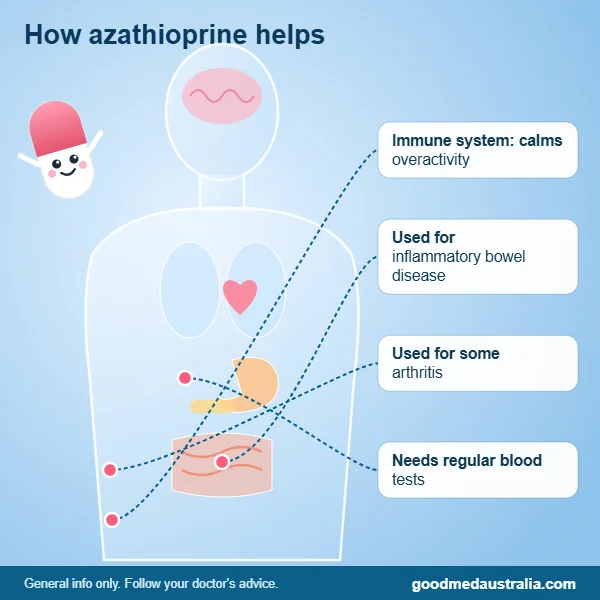
Azathioprine is a synthetic thiopurine immunosuppressant that calms an overactive immune system. Many of its risks come from that same action, which is why monitoring is a routine part of treatment rather than an optional extra. This article explains the common side effects, the warning signs that need prompt attention and the safety habits that matter in Australia. It is educational only and doesn’t replace advice from your doctor or pharmacist.
Common side effects versus warning signs
Some side effects are mild and tend to appear early. Initial nausea, headaches and mild hair thinning are commonly described. For nausea, some people find that taking tablets after food helps, but check this with your pharmacist rather than changing how you take the medicine on your own.
Other symptoms need prompt medical attention:
- unexpected fever or other signs of infection
- unexplained bruising or bleeding
- severe abdominal pain
- dark, tarry stools
- yellowing of the skin or eyes
A practical example: a mild headache in the first week is worth mentioning at your next appointment. A fever, or bruises you can’t explain, is a reason to call your doctor or seek assessment the same day. These symptoms can point to infection, effects on the blood, or liver problems, so don’t wait for the next scheduled test.
Why the TPMT test comes first
Before treatment begins, you’ll usually have a blood test for TPMT (thiopurine methyltransferase) enzyme activity. TPMT helps the body process azathioprine. If activity is low, the medicine can build up and raise the risk of bone marrow toxicity, which affects blood cell production.
TPMT and NUDT15 variations can increase the risk of severe bone-marrow toxicity. Your clinician may arrange enzyme or genetic tests before treatment. Testing does not replace regular blood counts and liver monitoring.
Routine blood tests: what they check and why
Two tests form the backbone of monitoring: a Full Blood Count (FBC) and Liver Function Tests (LFTs). The FBC looks at your blood cells, since azathioprine can affect them. The LFTs check how your liver is coping.
Testing is typically weekly or fortnightly in the first few weeks, then every 6 to 12 weeks once your results have stabilised. Your own schedule may differ, so follow what your treating team sets.
Many people find the early frequency a nuisance. A helpful approach is to book the next test before you leave the pathology collection centre, and to keep a copy of your results. If you miss a test, contact your prescriber’s rooms rather than waiting for the next one.
Liver effects and what to watch for
Liver changes are one reason LFTs are part of the routine. Often they show up on a blood test before you feel anything. Yellowing of the skin or eyes and severe abdominal pain are symptoms to report promptly. If your results shift, your doctor decides what happens next. Don’t stop the medicine yourself, as stopping suddenly can create its own problems for the condition being managed.
Sun safety in a high-UV country
Sun sensitivity increases while taking azathioprine, and the risk of skin conditions is higher. In Australia’s climate, that makes sun protection a daily habit rather than a summer-only task:
- daily broad-spectrum SPF 50+ sunscreen
- protective clothing, including a hat and long sleeves where practical
- routine skin check-ups
A short walk to the letterbox or a drive with the window down still counts as exposure. Make sunscreen part of the morning routine, and mention any new or changing spots to your doctor early.
Infections and vaccines
Because azathioprine suppresses the immune system, infections can be more of a concern, and a fever should be assessed promptly. Live attenuated vaccines are contraindicated during treatment. Inactivated vaccines, such as the routine annual flu shot, are a different category.
Before any vaccination, tell the person giving it that you take azathioprine, and check with your doctor or pharmacist if you’re unsure which type you’re being offered. Also speak to your doctor if you’ve been around someone with chickenpox or shingles, as these infections need particular care when your immune system is suppressed.
Long-term risks: what the research here supports
For long-term safety, the main points are the ones above: ongoing infection vigilance, regular blood and liver monitoring, and careful sun protection with skin checks. If you’re worried about long-term risks specific to your condition or age, ask your specialist. They can weigh the risks against the benefits of controlling your illness, which is a judgement that general articles can’t make for you.
Frequently asked questions
Can I stop azathioprine if I have side effects?
Don’t stop or change your medicine without advice from your doctor or pharmacist. Contact them about side effects so they can assess whether anything needs to change.
Are the blood tests always needed?
Yes. Monitoring is a standard part of safe treatment, with more frequent tests early on and fewer once your results are stable.
Can I have the flu vaccine?
Inactivated vaccines such as the annual flu shot are generally distinguished from live vaccines, which are not suitable during treatment. Confirm with your doctor or pharmacist before any vaccination.
Do I really need sunscreen on cloudy days?
Sun vulnerability is increased while taking azathioprine, so daily protection is recommended. Ask your doctor if you want advice tailored to you.
Interactions and longer-term risks
Tell your specialist about allopurinol or febuxostat before taking either with azathioprine: serious interactions can cause bone-marrow toxicity. Immunosuppression also increases certain cancer risks, including skin cancers and lymphoma. Discuss your individual risk and skin checks; do not alter treatment yourself.
Sources and further reading
Noumed Azathioprine CMI. Check the leaflet matching your exact product; formulations, approved uses and instructions can differ.
Explore more medicine safety guides or read our frequently asked questions.
General education only. This does not replace an individual assessment by a doctor or pharmacist. In an emergency in Australia, call 000.
Find more trusted, plain-English health guides at goodmedaustralia.com.