
Sorry, nothing in cart.
Blog

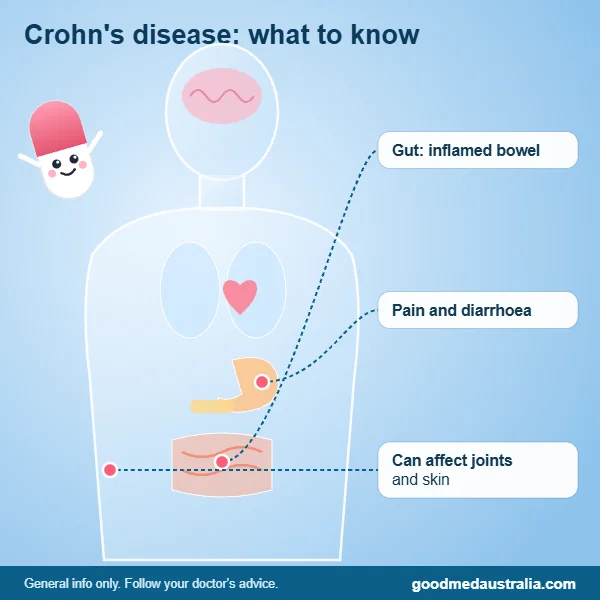
Crohn’s disease is a type of inflammatory bowel disease that can affect any part of the digestive tract. It usually first appears in people in their 20s and 30s. There is no cure, but treatment can control inflammation.
What are the symptoms?
Diarrhoea, abdominal pain, fatigue, reduced appetite and weight loss. Some people have blood in their stools, mouth ulcers or fever. Symptoms come and go.
What causes it?
The exact cause is unknown. Genetics, infections and environment are thought to play a part. Stress and some foods can trigger symptoms, but they do not cause the disease.
How is it diagnosed?
Through blood and stool tests, colonoscopy with biopsies, and imaging.
How is it treated?
Medicines to control inflammation, nutrition support, and sometimes surgery. Regular check-ups are important.
When is it urgent?
Increasing abdominal pain that comes and goes, with vomiting, can be a bowel obstruction. This is a medical emergency, so call triple zero (000). Crohn’s & Colitis Australia’s helpline is 1800 138 029.
In an emergency, call triple zero (000). For health advice, call Healthdirect on 1800 022 222.
Source: Healthdirect: Crohn’s disease. General education does not replace individual medical advice. Updated November 2026.
Find more trusted, plain-English health guides at goodmedaustralia.com.