
Sorry, nothing in cart.
Blog

Red, sticky or itchy eyes? Conjunctivitis (pink eye) is common, but the right eye drops depend on the cause. Here is how to tell them apart.
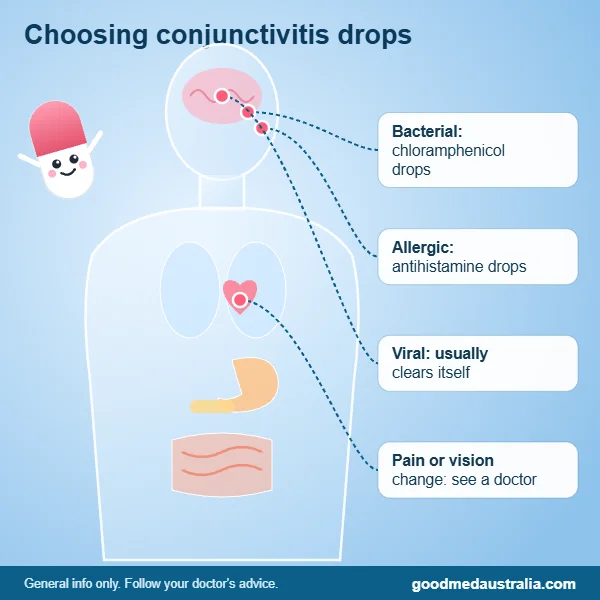
Key points at a glance
- Bacterial conjunctivitis: sticky yellow or green discharge; chloramphenicol drops from a pharmacist can help.
- Viral conjunctivitis: watery, often with a cold; usually clears on its own in 1 to 3 weeks.
- Allergic conjunctivitis: itchy, watery eyes, often with hay fever; antihistamine drops help.
- Contact lens wearers should see a doctor or optometrist promptly.
- Pain, light sensitivity or reduced vision need urgent review.
Which drops for which type?
- Bacterial: chloramphenicol drops or ointment.
- Viral: lubricating drops and cool compresses for comfort.
- Allergic: antihistamine or mast-cell drops such as olopatadine or ketotifen.
Using eye drops properly
- Wash hands before and after.
- Tilt head back, pull down the lower lid and drop in.
- Do not touch the tip to your eye.
- Discard after the recommended time once opened.
See a doctor if
- Eye pain, light sensitivity or blurred vision.
- You wear contact lenses.
- A newborn has red or sticky eyes.
- No improvement after 2 days of treatment.
Read: conjunctivitis guide, chloramphenicol drops and olopatadine drops.
Frequently asked questions
Can I buy conjunctivitis drops without a prescription?
Some, such as chloramphenicol, are available from a pharmacist after a quick chat.
How long is conjunctivitis contagious?
Bacterial and viral types spread easily, so wash hands often and avoid sharing towels.
Should children stay home?
Check your state’s school exclusion rules.
Can I wear contact lenses?
Stop wearing them until your eyes are healed and see an optometrist.
Find more trusted, plain-English health guides at goodmedaustralia.com.
In an emergency, call triple zero (000). For health advice, call Healthdirect on 1800 022 222.
Source: Healthdirect conjunctivitis. General education does not replace individual medical advice. Updated November 2026.