
Sorry, nothing in cart.
Blog

Clotrimazole and miconazole are the two most common antifungal creams in Australian pharmacies. They are very similar, with a few practical differences.
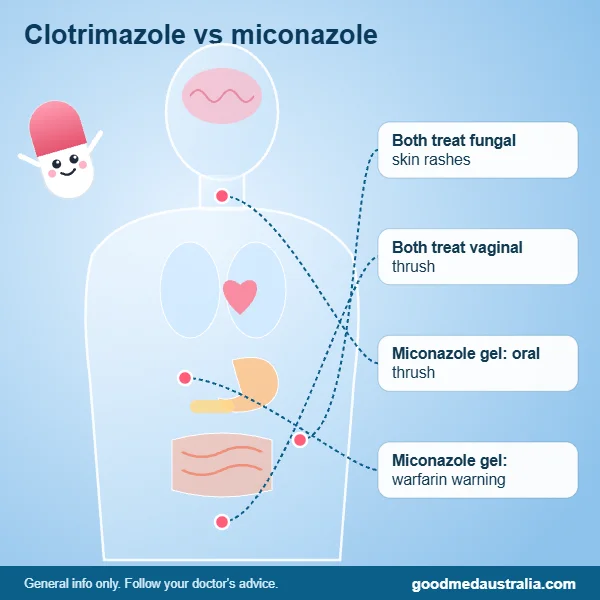
Key points at a glance
- Both are azole antifungals that stop fungus growing.
- Both treat tinea, jock itch, nappy rash with thrush and vaginal thrush.
- Miconazole also comes as an oral gel for mouth thrush.
- Miconazole oral gel can seriously interact with warfarin.
- Continue treatment for 1 to 2 weeks after the rash clears.
Which to choose?
- Skin rashes: either works well.
- Vaginal thrush: both available as creams or pessaries.
- Mouth thrush: miconazole oral gel (check interactions).
- Combined with a mild steroid: some products add hydrocortisone for itchy rashes.
Side effects
Mild burning, itching or redness at the application site.
Read: clotrimazole, miconazole cream and tinea.
Frequently asked questions
Which is stronger?
They are similarly effective for most skin infections.
How long until it works?
Itch often improves in a few days; keep going for 1 to 2 weeks after clearing.
Can I use them in pregnancy?
Topical use is generally considered suitable; ask your pharmacist.
Why the warfarin warning?
Miconazole oral gel is absorbed and can increase warfarin’s effect.
Find more trusted, plain-English health guides at goodmedaustralia.com.
In an emergency, call triple zero (000). For health advice, call Healthdirect on 1800 022 222.
Source: NHS clotrimazole and miconazole information. General education does not replace individual medical advice. Updated November 2026.