
Sorry, nothing in cart.
Blog

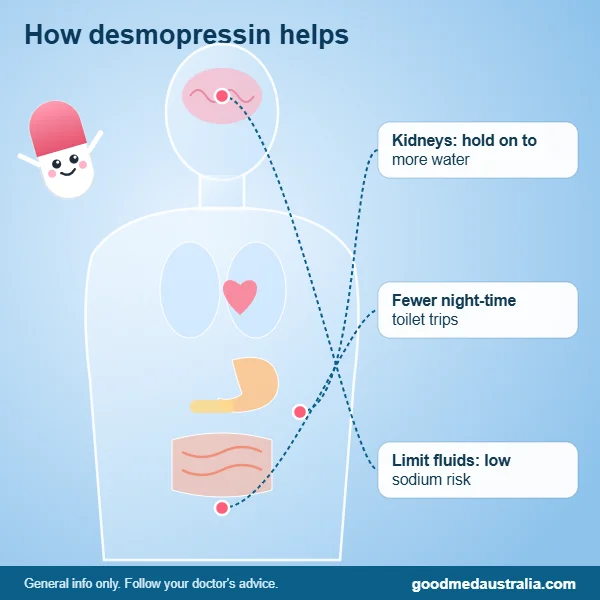
A medicine that helps your body hold on to water can, in the wrong circumstances, hold on to too much of it. That is the idea behind the main safety warning for desmopressin. If you or someone you care for has been prescribed it, the warning about low blood sodium (hyponatraemia) is worth understanding properly, because it is largely about fluids and timing rather than anything mysterious.
Why desmopressin can lower blood sodium
Desmopressin is a synthetic version of vasopressin, also called antidiuretic hormone. It signals the kidneys to reabsorb water, so less urine is made. That is the intended effect.
Desmopressin reduces water loss through the kidneys. Excess water intake relative to the prescribed fluid plan can dilute blood sodium. Fluid needs differ between bedwetting and diabetes insipidus; follow the plan for your own condition.
Warning signs to know
Early symptoms can be easy to dismiss because they resemble everyday complaints:
- headache
- nausea or vomiting
- dizziness
- sudden weight gain
- muscle cramps or weakness
- confusion
More serious signs are seizures or loss of consciousness. These are emergencies. Call 000 rather than waiting to see if they pass.
The practical point is that a new headache and queasiness in someone taking desmopressin deserves a phone call to a pharmacist or doctor, not just a paracetamol and a hope for the best.
Who is more likely to be affected
Not everyone carries the same level of risk. The research points to several groups who face a higher chance of low sodium:
- adults aged 65 and over
- females, who appear to be more sensitive to the effect
- people with impaired kidney function
- people taking certain other medicines, including NSAIDs (such as ibuprofen), SSRI antidepressants and loop diuretics
The medicines point matters because several of these are common. An older adult using desmopressin for night-time urination might also take an anti-inflammatory for sore joints or an antidepressant, and neither may seem relevant to a “bladder” medicine. Tell your pharmacist about everything you take, including products bought over the counter.
Fluid timing
For bedwetting, Minirin tablet information limits fluids from one hour before until at least eight hours after a dose. This is not a general rule for diabetes insipidus, which needs an individual fluid and treatment plan. Ask your prescriber for written instructions.
As a general illustration, someone who takes their medicine in the evening may find that a large cup of tea, a glass of water by the couch and a late-night soft drink all fall inside the restricted period. Noticing these habits is often the most useful step.
Sick day rules
During fever, vomiting or diarrhoea, contact your prescriber urgently for a sick-day plan. For diabetes insipidus, withholding desmopressin or restricting fluids without advice can also be dangerous.
Formulations matter
Not all forms carry the same risk. Nasal spray is generally not approved for children with bedwetting because of a higher hyponatraemia risk compared with oral melt formulations. If a child has been given a product you are unsure about, ask the pharmacist to check it against the approved information.
If you suspect low sodium
- Do not take another dose until you have spoken to a doctor or pharmacist.
- Note what you have been drinking, any illness, and any new medicines.
- Seek urgent medical care for confusion, seizures or loss of consciousness, and call 000.
Side effects can also be reported to the TGA, which helps monitor medicine safety in Australia. Your pharmacist can explain how.
Frequently asked questions
Is low sodium common with desmopressin?
There is no single risk estimate that applies to every formulation and condition. Age, kidney function, medicines and fluid intake all affect risk.
Can I just drink less all day to be safe?
Not without advice. The fluid restriction advice is tied to the timing of the dose. Changing your overall fluid intake on your own could create other problems, so check with your doctor or pharmacist.
Do over-the-counter pain relievers matter?
They can. NSAIDs such as ibuprofen are among the medicines linked with higher low sodium risk when combined with desmopressin. Ask a pharmacist before using them.
Where can I find reliable product information?
The Australian CMI leaflet for your specific product is a good starting point. A community pharmacist can walk you through it.
Sources and further reading
Minirin tablets. Check the leaflet matching your exact product; formulations, approved uses and instructions can differ.
Explore more medicine safety guides or read our frequently asked questions.
General education only. This does not replace an individual assessment by a doctor or pharmacist. In an emergency in Australia, call 000.
Find more trusted, plain-English health guides at goodmedaustralia.com.