
Sorry, nothing in cart.
Blog

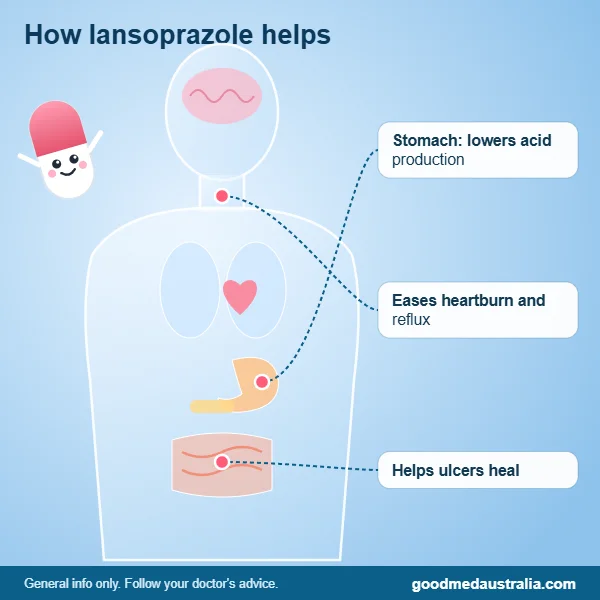
Most people who search for lansoprazole side effects are not looking for a scare. They want to know whether the headache or loose bowel this week is normal, and whether taking the tablet for months or years is something to worry about. Both questions deserve a straight answer, and the answers differ depending on how long the medicine is used.
What lansoprazole is, and what it is not
Lansoprazole is a proton pump inhibitor (PPI), a class of medicines that reduces the amount of acid the stomach lining produces. In Australia it is a Schedule 4, prescription-only medicine.
Lansoprazole is a proton pump inhibitor. It reduces stomach acid; the reason for treatment determines its appropriate duration.
Short-term side effects: usually mild and temporary
Side effects in the early days and weeks tend to be mild and transient, and they affect a minority of users. The commonly reported ones are:
- headache and dizziness
- nausea and vomiting
- diarrhoea or constipation
- stomach pain and flatulence
- dry mouth or changes in taste
A practical way to think about this: if you start lansoprazole and have a mild headache or looser bowels for a few days, that sits within the expected pattern described by sources such as Healthdirect Australia. It is still worth mentioning to your pharmacist, who can tell you whether it fits and whether anything else you take could be contributing. If symptoms are severe, keep getting worse or simply do not settle, contact your doctor rather than waiting it out.
Long-term side effects: where the better-established concerns sit
The longer stomach acid is reduced, the more the body’s normal digestive processes are affected. The long-term concerns most consistently described, including by the NHS and in Australian medical literature, are below.
Vitamin B12 and magnesium
Stomach acid helps the body absorb certain nutrients. Prolonged acid reduction can impair this, which may lead to vitamin B12 deficiency or low blood magnesium (hypomagnesaemia).
- Low B12 can show up as fatigue, a sore tongue, or tingling in the hands or feet.
- Low magnesium can cause muscle cramps, dizziness or an irregular heartbeat.
These symptoms are common and have many causes, so do not assume lansoprazole is responsible. But if you have been on a PPI for a long time and notice any of them, tell your doctor. A blood test can give a clear answer, and it is a much better route than guessing.
Bone health
Extended high-dose PPI use, typically beyond a year, is associated with a higher risk of osteoporotic fractures of the hip, wrist or spine, particularly in older adults. If you are older or already have concerns about bone strength, it is a good reason to raise the topic at your next medication review.
Bowel infections
Stomach acid is part of the gut’s natural defence against bacteria we swallow. Reducing it slightly increases the risk of bowel infections such as Clostridioides difficile. The increase is described as slight, but it matters if you develop persistent or severe diarrhoea, especially after recent antibiotics. In that situation, seek medical advice promptly.
How long is too long?
There is no single safe duration for everyone. Review whether treatment is still needed with your prescriber, particularly if it has continued for months.
A sensible approach is to ask your doctor or pharmacist at regular intervals whether you still need it, and whether the benefit continues to outweigh the risks for you.
Stopping: why not to do it suddenly
After long-term use, stopping lansoprazole suddenly can cause a temporary spike in stomach acid, often called rebound acid. It can feel like heartburn returning with a vengeance, and many people mistake it for proof that they cannot come off the medicine at all.
The better approach is a doctor-guided plan, which may involve tapering. Your doctor can also explain what to expect and which symptoms to watch for. Do not adjust, start or stop prescription medicines without speaking to a doctor or pharmacist.
Frequently asked questions
Are headaches and nausea on lansoprazole normal?
They are among the commonly reported short-term effects and are usually mild and temporary. If they persist or bother you, check with your pharmacist or doctor.
Does lansoprazole cause vitamin B12 deficiency?
Long-term acid reduction can impair B12 absorption, and deficiency is a recognised long-term effect. Fatigue, a sore tongue and tingling in the hands or feet are possible signs, though they have many other causes. A doctor can arrange testing.
Is lansoprazole available over the counter in Australia?
No. It is a Schedule 4 prescription-only medicine in Australia.
Do the kidney and cognitive decline links mean I should stop?
No. These come from observational studies that show association, not proven cause. Do not stop a prescribed medicine on your own because of them. Discuss your concerns with your doctor.
Other warning signs
Acute kidney inflammation is a recognised risk with proton pump inhibitors and can occur at any time. Seek prompt medical assessment for reduced urine, blood in urine or unexplained fever and rash. Vomiting blood, black tarry stools or severe chest pain require urgent assessment.
Sources and further reading
Zoton FasTabs. Check the leaflet matching your exact product; formulations, approved uses and instructions can differ.
Explore more medicine safety guides or read our frequently asked questions.
General education only. This does not replace an individual assessment by a doctor or pharmacist. In an emergency in Australia, call 000.
Find more trusted, plain-English health guides at goodmedaustralia.com.