
Sorry, nothing in cart.
Blog

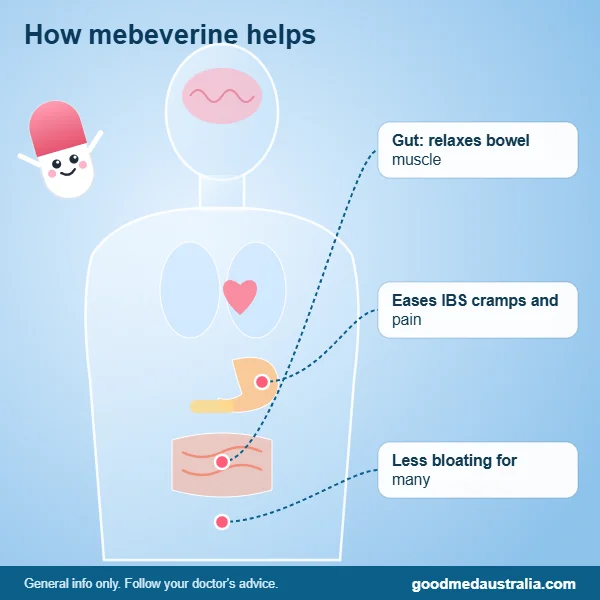
Cramping that arrives after a meal, a bloated stomach by mid-afternoon, a sudden dash to the toilet: for people with irritable bowel syndrome (IBS), these symptoms can disrupt ordinary days. If a doctor has mentioned mebeverine, you probably want to know what it does inside the gut, what to watch for, and how it differs from other gut medicines. This article covers those questions in plain terms.
What mebeverine is and where it fits
Mebeverine is a prescription medicine known as a musculotropic antispasmodic. In Australia it is sold under brand names including Colofac and APO-Mebeverine. It is approved for the symptomatic management of IBS and related functional bowel disorders. The symptoms it is aimed at include abdominal pain, cramping, bowel spasms, flatulence and non-specific diarrhoea, with or without alternating constipation.
The wording matters. “Symptomatic management” means the medicine is used to ease symptoms. It is not described as a cure, and it does not replace a proper diagnosis.
How mebeverine works
The gut wall contains smooth muscle that contracts in waves to move food along. In IBS, those contractions can become painful or irregular, and that is where cramping and spasm come from.
“Musculotropic” means mebeverine acts directly on that smooth muscle in the digestive tract. It relieves spasm without interfering with normal intestinal motility, so the gut can keep moving food along as usual.
Older gut-relaxing medicines work differently. Anticholinergic drugs act on nerve signalling, and that can cause effects well beyond the gut, such as dry mouth or blurred vision. Mebeverine’s direct action on the gut muscle is why it is not associated with those widespread anticholinergic effects.
Approved use, early research and traditional use
These three categories are often blurred together online, so here they are kept apart.
| Category | What it means for mebeverine |
|---|---|
| Approved use | Symptomatic management of IBS and related functional bowel disorders, covering abdominal pain, cramping, spasm, flatulence and non-specific diarrhoea. |
| Early and ongoing research | Systematic reviews and meta-analyses report reduced abdominal pain and distension compared with placebo, with a favourable safety profile. Researchers are still studying the precise cellular mechanisms, including calcium channel blockade and phosphodiesterase inhibition, and its place in gut-brain axis management. |
| Traditional use | None. Mebeverine is a synthetic pharmaceutical, with no history of herbal or botanical use. |
The research column is worth reading carefully. Reviews pooling several studies are encouraging for pain and distension, but studies of the underlying mechanisms are still developing. That is not the same as a settled explanation of every effect. Your doctor can tell you how this evidence applies to your situation.
Side effects: what is usually mild and what is not
Mebeverine is generally well tolerated. Occasional side effects include:
- skin rash
- itchy skin
- hives
- mild dizziness
- nausea
Skin reactions deserve a little more attention than the others. A rash, itch or hives can be a sign that your body is reacting to the medicine, so mention them to your doctor or pharmacist rather than waiting to see if they pass.
Severe allergic reactions are rare, but they are an emergency. Swelling of the face or throat, or signs of anaphylaxis, need immediate emergency care. In Australia, call 000.
Getting mebeverine in Australia
Mebeverine is a Schedule 4 (prescription-only) medicine in Australia, so you need a prescription from a doctor. It is also not subsidised on the Pharmaceutical Benefits Scheme (PBS), which means the cost is not reduced the way it is for PBS-listed medicines. Listings can change, so a pharmacist can confirm the current position.
Practical situations worth thinking through
Your symptoms are new
If you have never been diagnosed and are experiencing cramping, bloating or changes in bowel habits, the first step is an assessment, not a medicine. IBS is a functional diagnosis, and a doctor needs to rule out other causes before settling on it.
You notice red flags
Unexplained weight loss or blood in your stool are not symptoms to manage at home. They call for prompt evaluation by a doctor, whatever medicine you may or may not be taking.
You are pregnant, planning a pregnancy or breastfeeding
Speak to your doctor or pharmacist before using mebeverine. Suitability depends on your individual circumstances, and this is a conversation to have in advance.
You are older or take other medicines
Age and existing medicines can affect what is appropriate. A pharmacist can review your full medicine list, including over-the-counter products and supplements.
Something new appears after starting
A new rash, persistent nausea or ongoing dizziness is worth a call to your pharmacist or doctor. They can decide whether it is related to the medicine.
Frequently asked questions
Does mebeverine cure IBS?
No. It is approved for the symptomatic management of IBS and related functional bowel disorders, meaning it targets symptoms such as pain and cramping.
Does it cause dry mouth or blurred vision like older antispasmodics?
Mebeverine acts directly on gut smooth muscle rather than through anticholinergic pathways, so it is not associated with those widespread effects. Any unusual symptom should still be reported to a healthcare professional.
Is it available without a prescription?
No. In Australia it is a Schedule 4 prescription-only medicine.
Is there any traditional or herbal use?
No. It is a synthetic pharmaceutical with no history of traditional or botanical use.
Conclusion
Mebeverine is a targeted option for IBS symptoms. It relaxes gut smooth muscle directly, leaves normal gut movement alone, and avoids the broad anticholinergic effects of older medicines. Its approved use is clear, early research is supportive but still developing, and it has no traditional use. Side effects are usually mild, but skin reactions should be reported and any facial or throat swelling is an emergency. Whether it suits you depends on a proper diagnosis, so speak to your doctor or pharmacist, especially if you are pregnant, breastfeeding, or have red-flag symptoms such as blood in the stool or unexplained weight loss.
Sources
- Healthdirect Australia, APO-Mebeverine medicine information
- Australian Commission on Safety and Quality in Health Care, APO-Mebeverine consumer medicine information summary
- NHS UK, Mebeverine side effects and guidance
- PMC / National Institutes of Health, Systematic review on the efficacy of mebeverine in IBS
This article is for general education only and is not medical advice. It does not replace consultation with a doctor or pharmacist.
Find more trusted, plain-English health guides at goodmedaustralia.com.