
Sorry, nothing in cart.
Blog

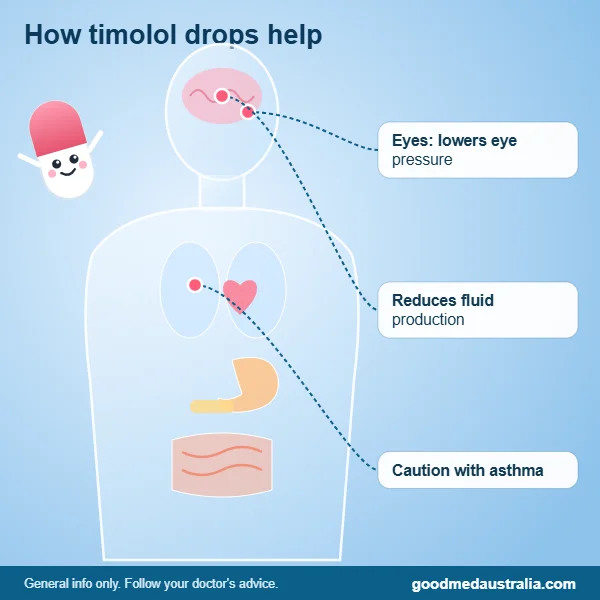
If you’ve been prescribed timolol eye drops, the instructions on the box probably raise more questions than they answer. Why would a drop for the eye mention the heart and lungs? And why does the pharmacist ask about asthma? The answers come down to how the medicine works and where it goes after it leaves the bottle.
What timolol eye drops are approved to do
Timolol maleate is a beta-blocker. In the eye, it lowers intraocular pressure by reducing the production of aqueous humour, the clear fluid that fills the front of the eye. Less fluid being made means lower pressure inside the eye.
In Australia, timolol eye drops are approved by the Therapeutic Goods Administration (TGA) to reduce intraocular pressure in:
- chronic open-angle glaucoma
- ocular hypertension
- aphakic glaucoma (glaucoma in an eye whose natural lens has been removed)
Pressure matters because raised pressure is a recognised concern for the optic nerve in glaucoma. Whether timolol suits a particular person is a decision for their doctor, usually an eye specialist, after proper assessment.
Side effects: in the eye and beyond it
Most people expect side effects to stay where the drop lands. With timolol, they can also show up elsewhere in the body.
Local effects
The common ones are mild stinging, watery eyes and temporary blurred vision. These are the effects most people notice first, and they are worth mentioning at a review if they persist or bother you.
Whole-body effects
A drop that isn’t absorbed by the eye can drain through the tear duct (the nasolacrimal duct) towards the nose and throat, where it can enter the bloodstream. Once there, a beta-blocker can act on the body much as a beta-blocker tablet would. Reported effects include:
- a slow heart rate (bradycardia)
- fatigue
- cold hands and feet
- chest or breathing tightness in sensitive people
Timolol can enter the bloodstream. Asthma or a history of asthma, severe COPD and certain slow-heart-rate or heart-block conditions are contraindications, not simply reasons for extra caution. Tell your prescriber before using the drops.
Cutting down on drainage
A technique called punctal occlusion is often described to limit how much medicine reaches the bloodstream. It involves gently pressing the inner corner of the eye, near the nose, for one to two minutes after the drop goes in. Ask your pharmacist or eye specialist to show you, since it’s easy to get wrong when you’re doing it for the first time.
Contact lenses
Many standard drops contain preservatives such as benzalkonium chloride, which soft contact lenses can absorb. The usual advice is to take lenses out before the drop goes in and wait at least 15 minutes before putting them back. If you wear lenses, mention it when the drops are prescribed, as it may affect which product suits you.
A realistic scenario
Tell every treating clinician about your eye drops, including before an operation. Eye medicines can interact with heart and blood-pressure medicines.
Prescription status in Australia
Timolol eye drops are Schedule 4 in Australia, meaning they are prescription-only. That reflects the need for an eye examination, a diagnosis and follow-up. Glaucoma often causes no obvious symptoms early on, so regular checks matter even if your eyes feel fine. Your pharmacist can also give you the Consumer Medicine Information (CMI) leaflet for your specific product, and these are available through Australian health information services such as Healthdirect.
Frequently asked questions
Why does an eye drop affect my heart or breathing?
Some of the drop can drain through the tear duct and be absorbed into the bloodstream. As a beta-blocker, timolol can then affect heart rate and airways in susceptible people.
Are blurred vision and stinging normal?
Mild stinging, watery eyes and temporary blurred vision are listed as common local effects. If they are persistent or worrying, talk to your doctor or pharmacist.
Can I buy it without a prescription?
No. In Australia it is Schedule 4, so a prescription is required.
Should I change how I use my drops if I notice side effects?
For routine treatment changes, speak to your eye specialist. Breathing difficulty, fainting or a very slow pulse needs immediate medical attention; do not take another dose while waiting for emergency assessment.
Sources and further reading
Timoptol. Check the leaflet matching your exact product; formulations, approved uses and instructions can differ.
Explore more medicine safety guides or read our frequently asked questions.
General education only. This does not replace an individual assessment by a doctor or pharmacist. In an emergency in Australia, call 000.
Find more trusted, plain-English health guides at goodmedaustralia.com.