
Sorry, nothing in cart.
Blog

Walking is free, low impact and one of the easiest ways to move more. On its own it helps modestly with weight; combined with eating changes, it is powerful.
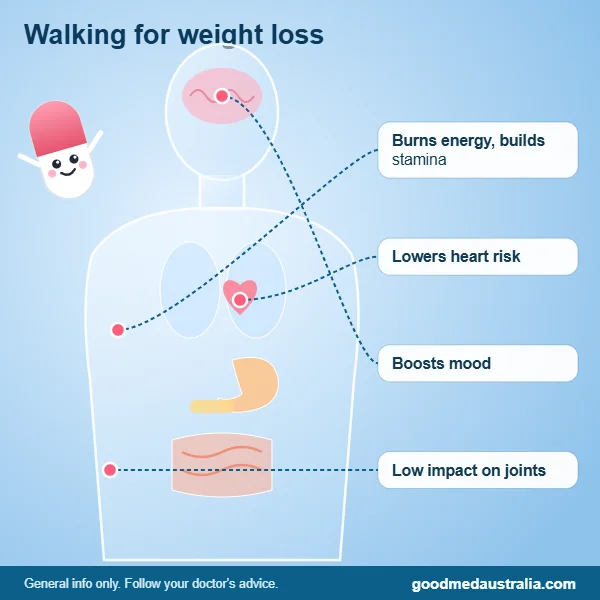
Key points at a glance
- Australian guidelines suggest 150 to 300 minutes of moderate activity a week.
- Brisk walking counts as moderate activity.
- Walking supports weight loss and helps keep weight off.
- It lowers blood pressure, blood sugar and stress.
- Add hills, pace or extra minutes as you get fitter.
Make it count
- Walk briskly enough to talk but not sing.
- Build up to 30 to 60 minutes most days.
- Break it into short walks after meals.
- Add hills or stairs.
- Pair with strength exercises twice a week.
Read: exercise for weight loss, calorie deficit and pre-diabetes.
Frequently asked questions
Is 10,000 steps a day necessary?
No magic number; more steps generally bring more benefit.
Is walking better than running?
Running burns more per minute, but walking is easier to sustain.
Does walking after meals help blood sugar?
Yes, short walks after meals can lower blood sugar spikes.
Can walking reduce belly fat?
Together with diet changes, it helps reduce overall and belly fat.
Find more trusted, plain-English health guides at goodmedaustralia.com.
In an emergency, call triple zero (000). For health advice, call Healthdirect on 1800 022 222.
Source: Australian Physical Activity Guidelines. General education does not replace individual medical advice. Updated November 2026.