
Sorry, nothing in cart.
Blog

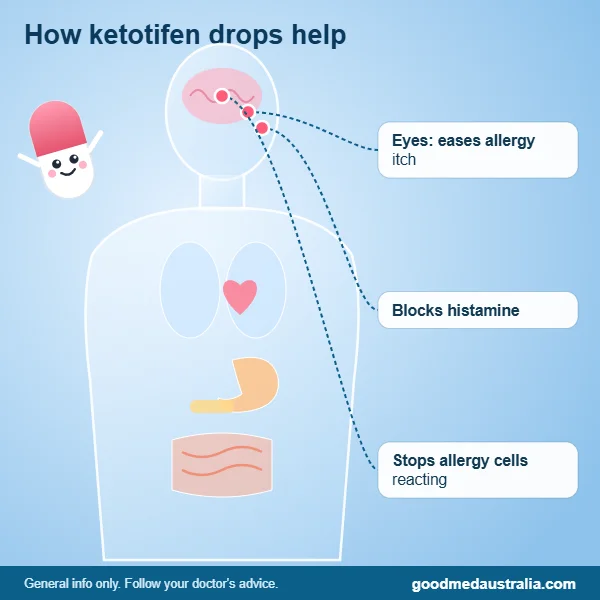
Few things are as hard to ignore as an itch you can’t scratch. When your eyes are streaming and itchy in spring, rubbing them feels like the only answer, but it tends to make things worse. Ketotifen eye drops are one option Australians can ask about at the pharmacy counter. Here is what they are approved for, how they work, and where the evidence stops.
What ketotifen eye drops are approved for in Australia
Ketotifen 0.025% (as fumarate) eye drops are approved by the Therapeutic Goods Administration (TGA) for the short-term symptomatic treatment of seasonal allergic conjunctivitis. In plain terms, that means relieving itchy, watery or swollen eyes and eyelids caused by seasonal allergy. The approval covers adults and children aged 3 years and older.
In Australia, ketotifen eye drops are Schedule 2 (Pharmacy Medicine), so you don’t need a prescription. They are sold behind or near the pharmacy counter, which means a pharmacist can ask a few questions before you use them. They are not PBS-listed. One well-known brand is Zaditen.
How they work: two actions in one drop
Ketotifen is described as having a dual action:
- Antihistamine: it blocks histamine H1 receptors, which are responsible for the acute itch when allergens reach the eye.
- Mast cell stabiliser: it helps stop mast cells releasing more allergic mediators, with the effect lasting up to 12 hours.
This differs from decongestant “get the red out” drops, which work by narrowing blood vessels. Ketotifen works on the allergic process rather than the appearance of redness, and it isn’t associated with the rebound redness that can follow decongestant drops.
Approved use, early research and traditional use
Health content often blurs these categories, so here they are side by side.
| Category | What it covers for ketotifen |
|---|---|
| Approved use (regulatory) | Short-term relief of symptoms of seasonal allergic conjunctivitis in people aged 3 years and over |
| Early research and pharmacology | Laboratory and clinical findings on other inflammatory pathways; ideas about itch control and eye rubbing |
| Traditional use | None. Ketotifen is a synthetic medicine developed in the late 20th century, with no herbal or folk medicine history |
What the early research suggests
Research shows ketotifen inhibits eosinophil chemotaxis (the movement of certain inflammatory cells), leukotriene activation and platelet-activating factor. That suggests broader activity than first-generation antihistamines alone. These findings describe how the drug behaves in the body. They are not extra approved uses, and they don’t mean ketotifen treats conditions beyond its approved indication.
Eye specialists also point out that controlling allergic itch reduces the urge to rub. Persistent eye rubbing is a recognised physical risk factor for corneal thinning conditions such as keratoconus. This is a reasonable argument for managing itch properly, but it is not proof that ketotifen drops prevent keratoconus.
Contact lenses: the detail that trips people up
Multi-dose bottles contain benzalkonium chloride, a preservative that can build up in soft contact lenses. For that reason, soft lenses should be removed before the drops go in and reinserted only after at least 10 to 15 minutes.
Some practical situations where this matters:
- If you put drops in on your way out the door, take your lenses out first. Putting the lenses back in straight away defeats the purpose of waiting.
- If you need drops regularly and wear soft lenses, ask a pharmacist, doctor or optometrist about preservative-free single-dose ampoules. These exist alongside standard multi-dose bottles.
- If your eyes are itchy while wearing lenses, check with your optometrist, because the lenses themselves can sometimes be part of the problem.
Pregnancy, breastfeeding and children
Ketotifen carries an Australian Pregnancy Category B1 rating. However, clinical trial data in pregnant and breastfeeding women are limited. If you are pregnant, planning a pregnancy or breastfeeding, talk to your doctor or pharmacist so the benefits and risks can be weighed for your situation. For children, the approval starts at age 3, so these drops are not intended for younger children.
Side effects and red flags
Common reactions are mild and short-lived, such as brief stinging or temporary blurred vision. It is sensible to wait until your vision clears before driving or doing anything that needs sharp sight.
Some symptoms call for medical assessment rather than more drops:
- Eye pain
- Changes in vision
- Symptoms that don’t settle or keep returning
Itchy, red, watery eyes are not always allergy. Dry eye disease, bacterial or viral infection and corneal problems can look similar at first, and a doctor, optometrist or pharmacist can help rule these out. Basic hygiene helps too: wash your hands and avoid touching the bottle tip to your eye or lashes.
Frequently asked questions
Do I need a prescription for ketotifen eye drops in Australia?
No. They are Schedule 2 (Pharmacy Medicine), available over the counter from pharmacies. A pharmacist can check whether they suit you.
Can I use them with soft contact lenses?
Remove lenses first and wait at least 10 to 15 minutes before putting them back in, because of the preservative in multi-dose bottles. Preservative-free single-dose units are another option to discuss with a health professional.
Are they the same as decongestant eye drops?
No. Decongestants shrink blood vessels to reduce redness. Ketotifen blocks histamine and stabilises mast cells, and it isn’t associated with rebound redness.
Are they suitable for children?
The approval covers children aged 3 years and older. Ask a doctor or pharmacist about your child’s situation.
Is ketotifen a natural or traditional remedy?
No. It is a synthetic pharmaceutical with no traditional use.
The bottom line
Ketotifen eye drops have a clear, approved role: short-term relief of seasonal allergic eye symptoms in people aged 3 and over, available from Australian pharmacies without a prescription. The wider research on inflammatory pathways and eye rubbing is interesting but remains supporting context. If you wear soft lenses, are pregnant or breastfeeding, are treating a child, or have symptoms like pain or vision changes, speak to a doctor, optometrist or pharmacist before using any eye drops.
Sources consulted
- Healthdirect Australia: Zaditen Consumer Medicine Information
- Australian Prescriber: Ketotifen hydrogen fumarate
- Sydney Eye Hospital Ophthalmic Pharmacopoeia: Ketotifen 0.025% eye drops
- Mayo Clinic: Ketotifen ophthalmic route patient information
This article is for general education only and is not a substitute for personal medical advice.
Related guides
- Dry Eyes in Australian Climates: Relief & Causes
- Conjunctivitis: Symptoms, Treatment and When to See a Doctor
- Stye Treatment: Symptoms, Home Care and When to See a Doctor
Find more trusted, plain-English health guides at goodmedaustralia.com.